
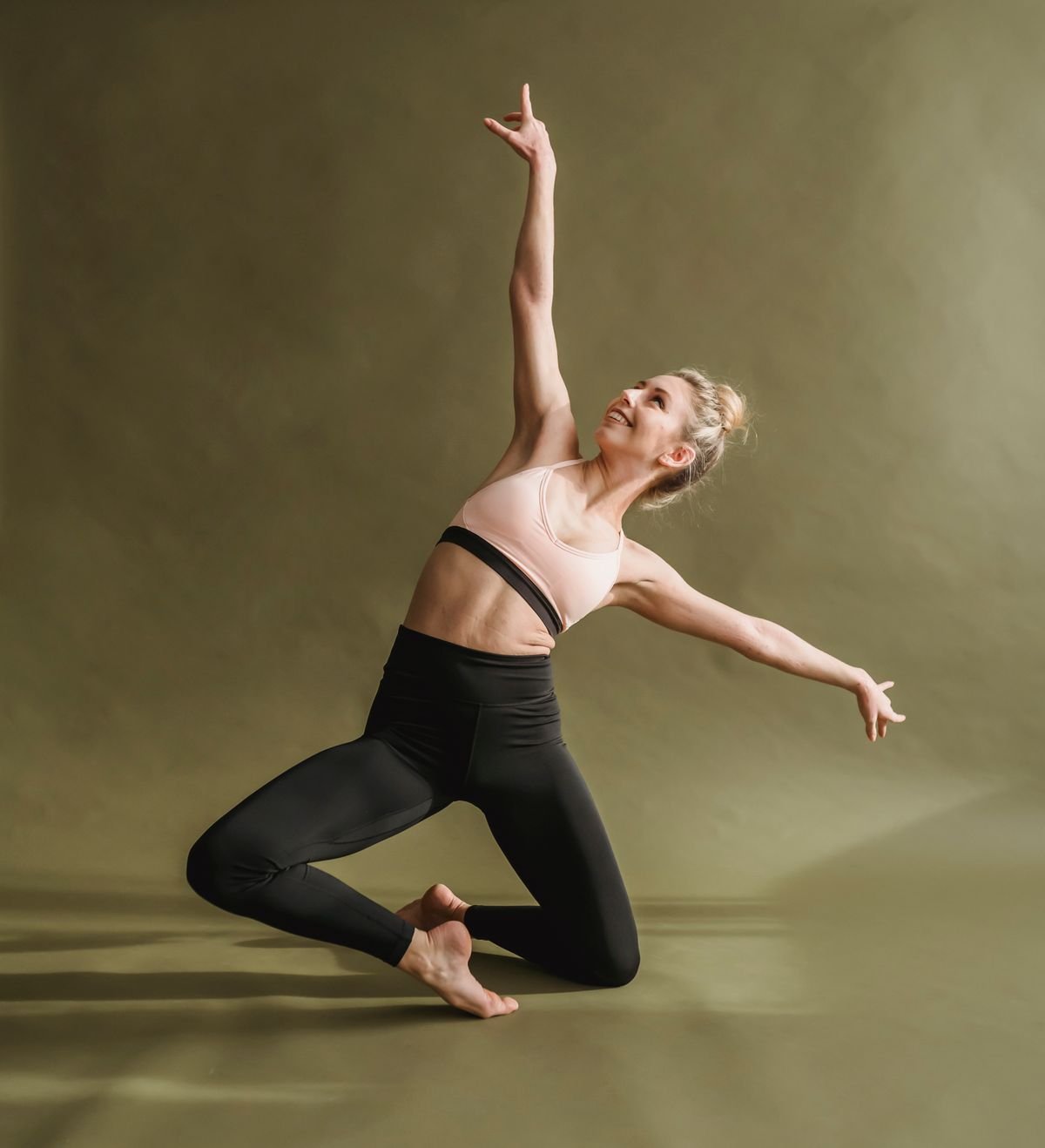

Somatic dancing has no steps to get wrong. Alone at home with the door closed, there is no audience, no routine to follow and no one to impress. Seven ways in for people who have not danced since a wedding, or who have never felt comfortable doing it. Try any of them for as long as you like, and stop whenever you want.
1. Set up the room
Close the door. Keep a phone or another way to call for help within reach, and silence notifications if you like. Use enough light to see the floor and any obstacles, keep your eyes open while you stand and move, and choose seated, supported movement if you prefer. If a mirror makes you self-conscious, face away from it or cover it. Clear the floor of anything you could trip over, wear socks with grip or go barefoot on a surface that is not slippery, and make sure you have space to move your arms. Set it up so nobody is watching, including you.
2. Begin smaller than dancing
Do not start by dancing. Start by swaying: weight from one foot to the other, eyes soft, for thirty seconds. Keep your eyes open and your floor visible, and let the sway grow or shrink at its own speed. You can also try it seated with support. There is no bar to clear. Choose controlled comfortable movement; standing still is also allowed.
3. Let one body part lead
Choose one part, such as a hand, an elbow or a hip, and choose a small comfortable movement while maintaining control and balance. You could even try this seated if standing is not comfortable. A small movement counts.
4. Use music as weather, not instruction
If you like music, put on a track you enjoy, but treat it as background weather and not as choreography. You can move with it, against it, slower than it, or in silence. If you catch yourself performing for the song, return to tracking a comfortable, controlled movement. The song is a guest and not a choreographer.
5. Choose controlled movement
You may notice an urge to change movement, but you do not need to follow it. Stay within comfortable, controlled movements and any restrictions from your clinician, and do not follow an urge simply because it arises. Spontaneous movement is simply movement without a plan. Avoid spinning, sudden drops and unstable positions if you are unsure, take it slowly if you have joint problems, and stop if anything hurts. If you have an injury, a heart or balance condition, or are pregnant, check with your doctor about what kind of movement suits you.
6. Let whatever comes come
Moving alone may bring up laughter, boredom, tears or nothing at all. Whatever happens is fine, and none of it needs to mean anything. If you want to, you can keep moving while a feeling is there. If it becomes too much, stop, sit still, look around the room and have a glass of water. You can also contact someone you trust.
7. End in stillness, briefly
When the movement winds down, stand or lie still for a minute and notice what is there: your breathing, your temperature, how the floor feels. Take your time before reaching for your phone. Drink some water.
Ways to keep it going
If you want to make it a habit, you might:
- pick a regular time, such as after work or before a shower, and keep it short
- make a playlist you can start without thinking
- write one line afterwards about what you noticed
- change something each time: the room, the music or the speed, or whether you move standing or seated with support
If you skip a week, that is fine. Start again with the sway.
Different spaces, different movement
Your room may not suit big movement. In a small flat you could dance seated, or work in one spot with the arms and head. If you share walls, you might choose slow, quiet music or headphones. You can also take it outdoors, in a garden or in an empty park, if you feel comfortable there. The practice does not depend on the space. A small, slow movement is as much a dance as a large one.
Dancing with feelings of shame about your body
Many people avoid dancing because they dislike how they look or move. Somatic dancing does not require anyone to look at you, so you can cover the mirror or face away from it. Keep your eyes open while standing or moving, and keep enough light to see the floor. If it helps, move seated with support. You can also change what you wear, choosing clothes that are comfortable and let you move freely. If thoughts about your body get loud, bring your attention to a sensation, such as your feet on the floor, and let the thoughts be there. If body image causes you real distress, a therapist can help.
If self-consciousness follows you indoors
If even alone you feel watched and frozen, begin with five-minute sessions, or move seated with support. Feeling self-conscious is common. Some people find a group led by a somatic or movement therapist an easier first room, and others prefer to stay at home. Both are valid.
Related: somatic shaking for beginners, a simpler place to begin.
