
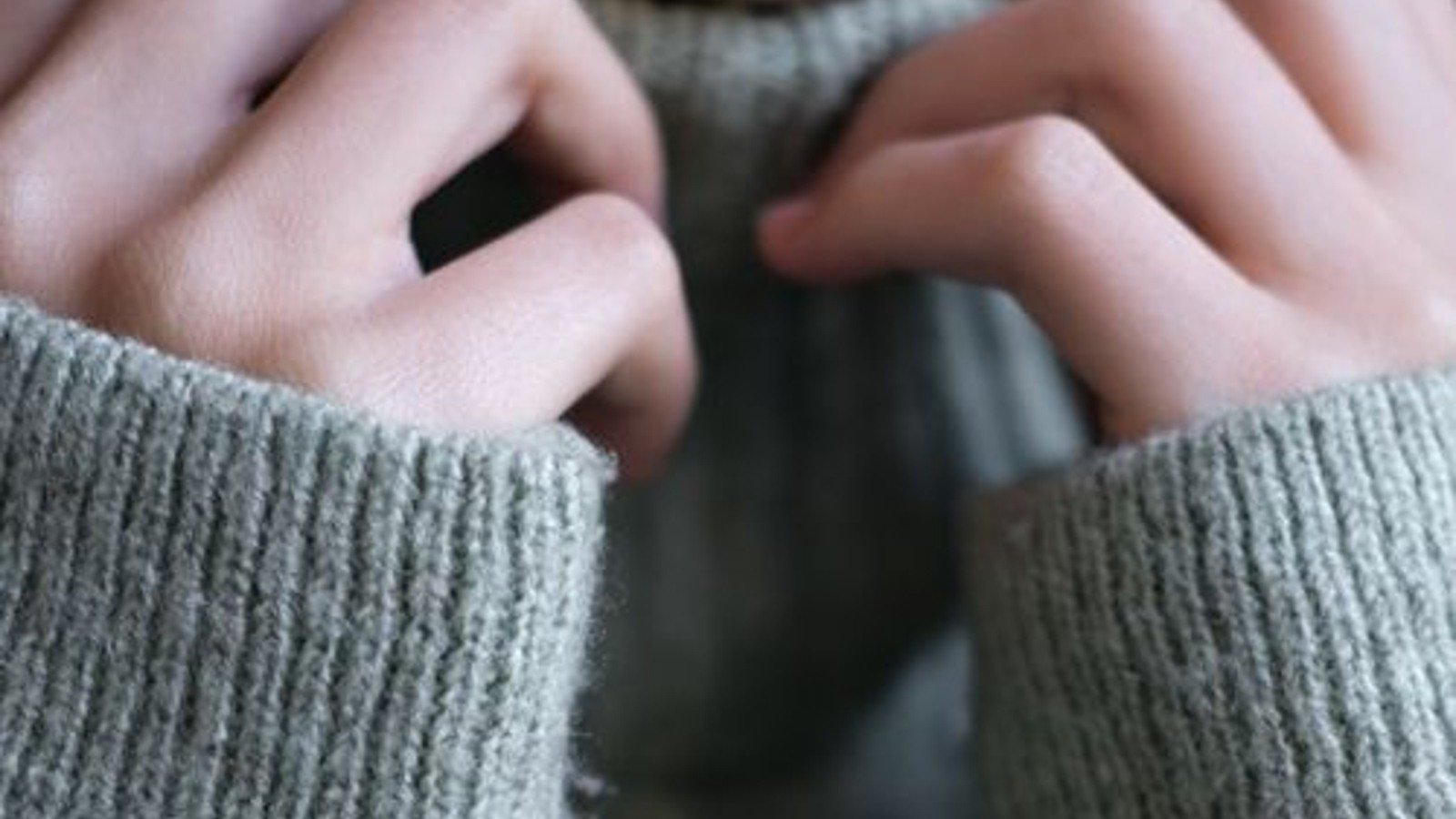

Some moments are too much, and they do not schedule themselves for when support is available. Self-holding means placing your own hands on your body, or using ordinary light support such as a blanket. These six forms are for the nights, the news, and the hard waves. Each is optional, and you can stop at any time.
1. The hand on the heart
One warm hand flat on the chest, over the heart. Breathe in your usual way and feel the hand move with the breath. It takes about thirty seconds and can be done in public. Self-contact is optional. Leave your hands elsewhere if touch feels uncomfortable.
2. The full self-hug
Arms wrapped around yourself, hands on opposite shoulders or arms, a gentle squeeze. You could rock slightly if you like. Release when you have had enough.
3. The hand on the belly
One or both hands warm on the belly, with the breath moving under them. A warm hand there can be comforting for some people. Skip this if it is uncomfortable, and if you have belly pain, get medical advice.
4. The face hold
Rest your hands lightly on your cheeks or temples if comfortable, without covering or pressing on the eyes, nose or mouth. You can keep your hands in your lap instead.
5. Rest with ordinary support
You can sit with your back supported by a chair or use an ordinary light blanket if that is comfortable. Keep your face and breathing clear, avoid overheating and remove the blanket whenever you wish. This practice does not require added weight or pressure on your torso. Do not put heavy objects over yourself or another person. If you are considering a weighted blanket, ask an occupational therapist or clinician for an individual safety assessment rather than treating it as a self-holding exercise.
6. The words that go with the holding
Physical holding can go with one quiet sentence: “This is hard, and I am here.” Say it silently while you hold yourself, and notice whether it helps. If it does not, you can leave it out.
Other ways to be held
Not everyone likes touch. If hands on your own body feels odd, you can try other kinds of support:
- hold a warm mug or a hot water bottle wrapped in cloth
- wrap yourself in a blanket or soft jumper
- sit with your back against a wall or a firm chair
- press your feet into the floor
- hold a smooth stone or a soft toy
Check the temperature, so that nothing is too hot, and put it down if it stops being comforting.
Making a small kit
If hard moments tend to arrive at night or when you are alone, you might put a few things in one place: a blanket, a small cushion, a mug, a note with a sentence on it and the phone number of a friend or a helpline. That way you do not have to look for anything when you do not have much energy. You can add to it and take things out.
Being with someone else
Sometimes the hardest moment is easier with another person in the room. You might ask a friend to sit nearby without talking, or to stay on the phone while you hold a mug. You can say what you need in a few words: “Please just stay.” If you are the one supporting someone, ask before touching them, and let them choose how much contact they want. Co-regulation means settling alongside another person.
When the moment is public
If a hard wave arrives on a train or at work, a hand on the heart or a hand wrapped around your own wrist can be done without anyone noticing. You could also step outside, find a quiet corridor or go to the bathroom for a few minutes. You do not need to explain.
After the wave
When the moment has eased a little, you can do something ordinary: drink some water, wash your face, turn on a light, put some music on. You might send a short message to someone, such as “Rough evening, nothing needed, just letting you know.” If you want, write down what helped, so you remember next time.
When self-holding is not enough
If the hard moments are frequent, escalating, or include thoughts of harming yourself, please reach out: a crisis line, a therapist, your doctor. Support from other people matters. If you are in danger of acting on thoughts of harming yourself, contact your local emergency number or crisis line now.
Related: the somatic containment exercise.
