
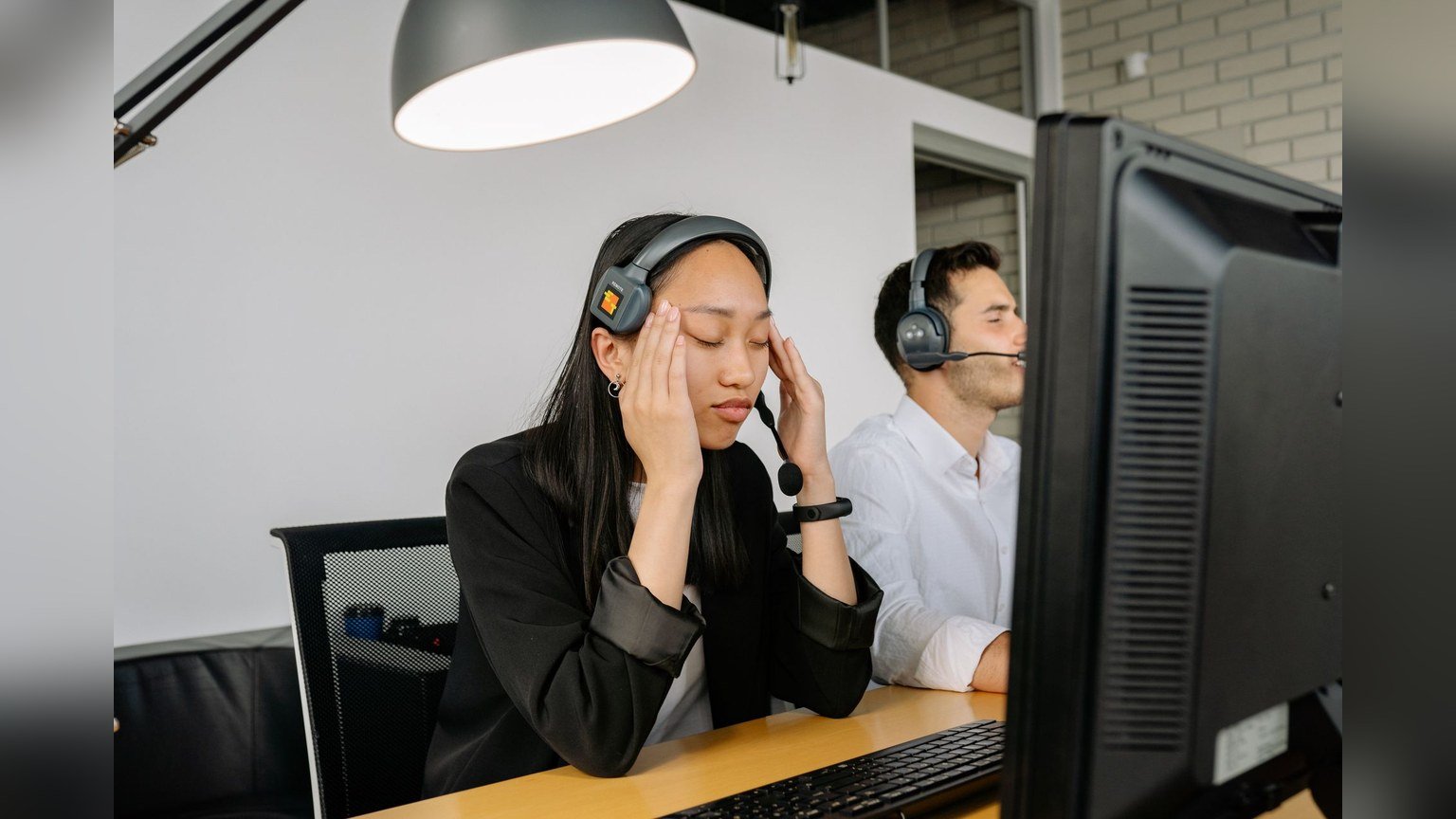

There is a particular kind of tiredness that comes from sitting very still while your mind sprints. By three in the afternoon your body has been parked for hours, your shoulders are somewhere near your ears, and the idea of “doing a practice” feels laughable. You are at work. People can see you. What exactly are you supposed to do, roll out a yoga mat?
No. This article is about the invisible break: somatic practices small enough to do at your desk, in a meeting, or on a packed commute, that nobody around you will register as anything at all. Two minutes is the unit. Nobody watching is the design constraint. Feeling genuinely different afterwards is the goal.
Why your body needs breaks your calendar does not show
The NHS is direct about prolonged sitting: UK adults average around nine hours of sitting a day, and the guidance is to break up long periods of sitting with at least light activity. The same page offers a quietly radical suggestion for office workers: set a reminder to get up every thirty minutes. Not because sitting is poison, the evidence is observational and the NHS says so, but because bodies are built for variety and desks deliver monotony.
Work stress adds a second layer. The NHS work-related stress guidance lists how it shows up: feeling withdrawn or tearful, jumping to worst-case conclusions, avoiding tasks, working longer hours. A two-minute body break will not fix a broken workload, and we will not pretend otherwise. What it can do is interrupt the physical spiral, the bracing, the shallow breathing, the frozen posture, so that you meet the workload with slightly more of yourself present.
The invisible toolkit
Each of these takes thirty seconds to two minutes, and each looks from the outside like nothing: like sitting, like thinking, like listening attentively in a meeting. Which, conveniently, is exactly what you are doing.
Feet on the floor. Let both feet rest flat. Press down gently, as if testing the floor, then release. Do that two or three times while reading your email. Grounding through the feet is one of the fastest ways to signal “here, now” to a racing system, and it is completely invisible below the desk line. Our full guide to a grounding exercise for overwhelm uses the same principle at home scale.
The long quiet exhale. Breathe in normally, then let the out-breath run a little longer than the in-breath, silently, through the nose if you like. Three or four rounds. No one has ever been caught exhaling. This is the smallest reliable downshift most people own, and it pairs beautifully with our breath grounding exercise for after work.
The thirty-second posture reset. Notice how you are sitting, without judging it. Then let yourself grow half a centimetre taller, let the shoulders drop half a centimetre lower, and let the screen come to your eyes rather than your eyes to the screen. Done. Postural awareness is the deeper skill; this is its office-friendly summary.
Hand squeeze and release. Under the desk or in your lap, make a gentle fist, hold for three seconds, release slowly. Repeat twice per hand. Deliberate tension followed by release teaches the difference between holding and letting go far better than trying to relax on command, and it is entirely hidden from view.
Eyes off the screen. Look at the furthest point you can see, a window, a distant wall, for ten slow seconds. Then back. Screen work narrows both your visual field and your attention; widening the eyes widens the mind’s aperture too. Nobody notices you looking out of a window. Looking out of windows is practically a British workplace tradition.
The two-minute protocol
When you have two full minutes, a tea break, the lift, the loo queue, stack them like this:
First thirty seconds: feet on the floor, press and release. Next thirty: two long exhales and a posture reset. Final minute: eyes to the distance, then let your gaze wander the room slowly, landing on three ordinary objects and actually seeing them. That is a complete somatic break. It will not show up on anyone’s radar, and it will very often take the edge off the next hour.
The thirty-minute reminder from the NHS guidance is the scheduling trick that makes this real. Put a quiet repeating timer on your phone or computer. When it goes off, do any one of the practices, even for twenty seconds. Frequency beats duration by a wide margin.
What a break can and cannot fix
A straight answer, because this is where wellness advice tends to overpromise. Desk practices help with the physical accumulation of the day: the bracing, the stillness, the stale attention. They are genuinely useful, especially used little and often, and they slot naturally into a wider daily somatic practice routine.
They do not fix the causes. If your workload is impossible, if a relationship at work is corrosive, if you are running on empty for months, the NHS work-stress guidance points the right way: work out what is driving the stress, change what you can, talk to your manager, and get support for the rest. In England you can refer yourself to NHS talking therapies without seeing a GP first. A breathing exercise is a companion through a hard job. It is not a reason to stay in one that is harming you.
Making it stick
Attach the practices to things that already happen: feet on the floor every time a meeting starts, a long exhale every time you send a message you found difficult, eyes to the window every time the kettle boils. Habits hitchhike well on existing moments. And be pleasantly unambitious: three invisible breaks a day, most days, will do more for you than a heroic twenty-minute session you abandon by Thursday.
FAQ
Can people really not tell I am doing these? Correct. Every practice here looks like ordinary working behaviour: sitting, reading, glancing out of the window, resting your hands in your lap. The effort is internal, which is precisely what makes the toolkit usable in meetings and open-plan offices.
How often should I take a somatic break? The NHS suggests breaking up sitting every thirty minutes with at least light activity. Tie one small practice to that rhythm, even twenty seconds of feet-on-floor, and let frequency do the work. Little and often beats rare and long.
Will two minutes actually change how I feel? Often, yes, modestly: a notch less braced, a notch more present. The effect is cumulative across the day rather than dramatic in the moment. If two minutes reliably takes the edge off, imagine what it prevents by six in the evening.
What if my work stress is bigger than any break? Then the honest answer is bigger action: a conversation with your manager, changes to what you can control, and professional support. NHS talking therapies accept self-referrals in England. Breaks help you cope; they are not a substitute for changing what needs changing.
The invisible break is the gateway practice of workplace somatics: no mat, no explanation, no one the wiser. If you would like to build a fuller personal practice, or eventually guide others, you are welcome to read about our somatic teacher training.
