
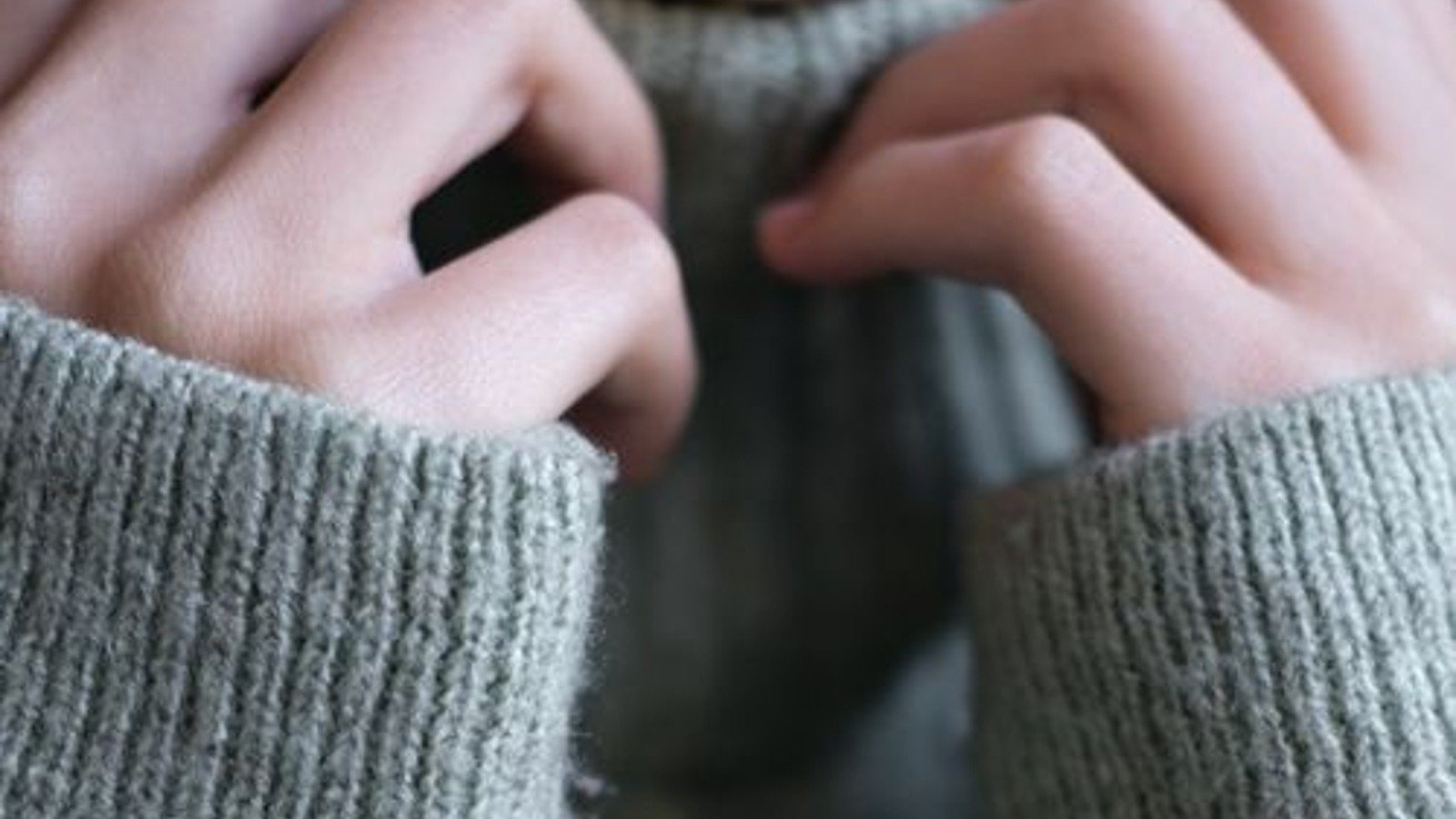

Sometimes a hand resting on a sleeve feels ordinary and reassuring. Sometimes it feels awkward. Sometimes you would much rather leave your body alone and look out of the window. Somatic self-contact begins by making room for all three possibilities.
Self-contact means choosing to place your own hand against a comfortable part of your body, or noticing the contact already there. In this practice, the aim is to explore pressure, warmth or support without demanding a particular emotional result. Touch is optional even when you are the person offering it to yourself.
What can self-contact offer?
Some people find an easy point of contact gives attention somewhere concrete to land. A hand against a forearm or a palm resting on a thigh may be easier to notice than a broad instruction to “feel your body.” Others find touch distracting or distressing. Neither response needs correcting.
A randomised study by Dreisoerner and colleagues studied self-soothing touch and hugs during a laboratory stress task in healthy young adults. The touch groups had lower cortisol responses than the control group, but heart rate and self-reported stress did not differ across the groups. That distinction matters: a physiological measure is not the same as feeling calmer. One laboratory study does not prove that self-contact treats trauma or works for everyone.
The practice below is an educational observation exercise, not a reproduction of that study or a treatment protocol. You are free to explore an ordinary contact point and equally free to use a non-touch option.
A short somatic self-contact practice
Purpose: Explore whether a chosen point of contact feels neutral, supportive or unhelpful. Time: One to three minutes; one brief touch is enough. Position: Sit, stand or rest comfortably. Keep your eyes open if that helps you remain aware of the room. Do not practise while driving or doing something that needs full attention.
- Start outside your body. Look at a familiar object or listen to an ordinary sound. Check that you feel able to pause, change your mind and stop.
- Choose a comfortable, non-sensitive contact point, such as a hand resting on your thigh or lightly against your opposite forearm. You can touch through clothing. Avoid painful, injured or irritated areas.
- Let the hand rest without gripping, rubbing or pressing hard. There is no need to place it on your chest, belly or any area you do not want to touch.
- Notice one simple quality: fabric texture, warmth, pressure, the weight of the hand, or no clear sensation. Do not decide what the sensation means about your emotions.
- After a few moments, move the hand away or change the contact. Ask whether you want another brief moment. You may stop after the first touch; you do not need to stay until you feel different.
- End by looking around and choosing an ordinary next step. Let breathing continue naturally throughout. No deep breath or closed eyes are required.
What to notice: Is the contact comfortable? Is it easier to notice the hand, the fabric or the room? Did you want more space? The most useful observation may be that touch is not what you need today.
If it feels too much: Remove your hand and stop. Return attention to the room, feel a nearby object or speak with someone you trust. Do not keep touching through panic, dizziness, distress or detachment. Seek qualified support if these experiences persist, and medical advice for new or concerning physical symptoms.
Integration: Finish the sentence “Today I preferred ___.” The answer might be light contact, contact through clothing, an external object or no practice at all. Preference is useful information.
Alternatives that do not involve touch
You can hold a cup, feel the chair supporting you, look at a plant or notice an ordinary sound. None is a lesser version of the practice. If bodily attention is difficult, staying with the external world may be the more workable choice.
If you have limited movement or sensation, choose a contact point available to you or skip touch entirely. There is no posture your body must copy from a photograph. Avoid turning the practice into another demand to be gentle in exactly the right way.
Common mistakes include gripping harder to create a sensation, expecting warmth to prove safety, and telling yourself that discomfort must be part of healing. A stronger sensation is not a better one. Listening to a wish to stop is part of the practice, not an interruption of it.
When guiding another person, demonstrate options without implying that they should choose touch. Self-contact does not authorise a facilitator to touch someone. Any practitioner touch involves separate consent, professional scope and appropriate training. Do not interpret a person’s choice to avoid touch as a symptom or a problem to solve.
For other anchors, explore resourcing or grounding when overwhelmed. Titration offers a way to keep an experiment small. People interested in guiding others can study consent and scope in somatic facilitator training. The choice to decline remains part of any thoughtful invitation.
FAQ
Must I put a hand on my heart? No. Choose a comfortable, non-sensitive area, touch through clothing or use a non-touch anchor instead.
Does self-contact always reduce stress? No. Responses vary, and laboratory findings do not guarantee how you will feel. Stop if touch is unhelpful.
Can a facilitator touch me during this practice? Self-contact refers to your own hands. It does not provide consent for another person to touch you; that requires a separate, clear agreement within appropriate professional limits.
