
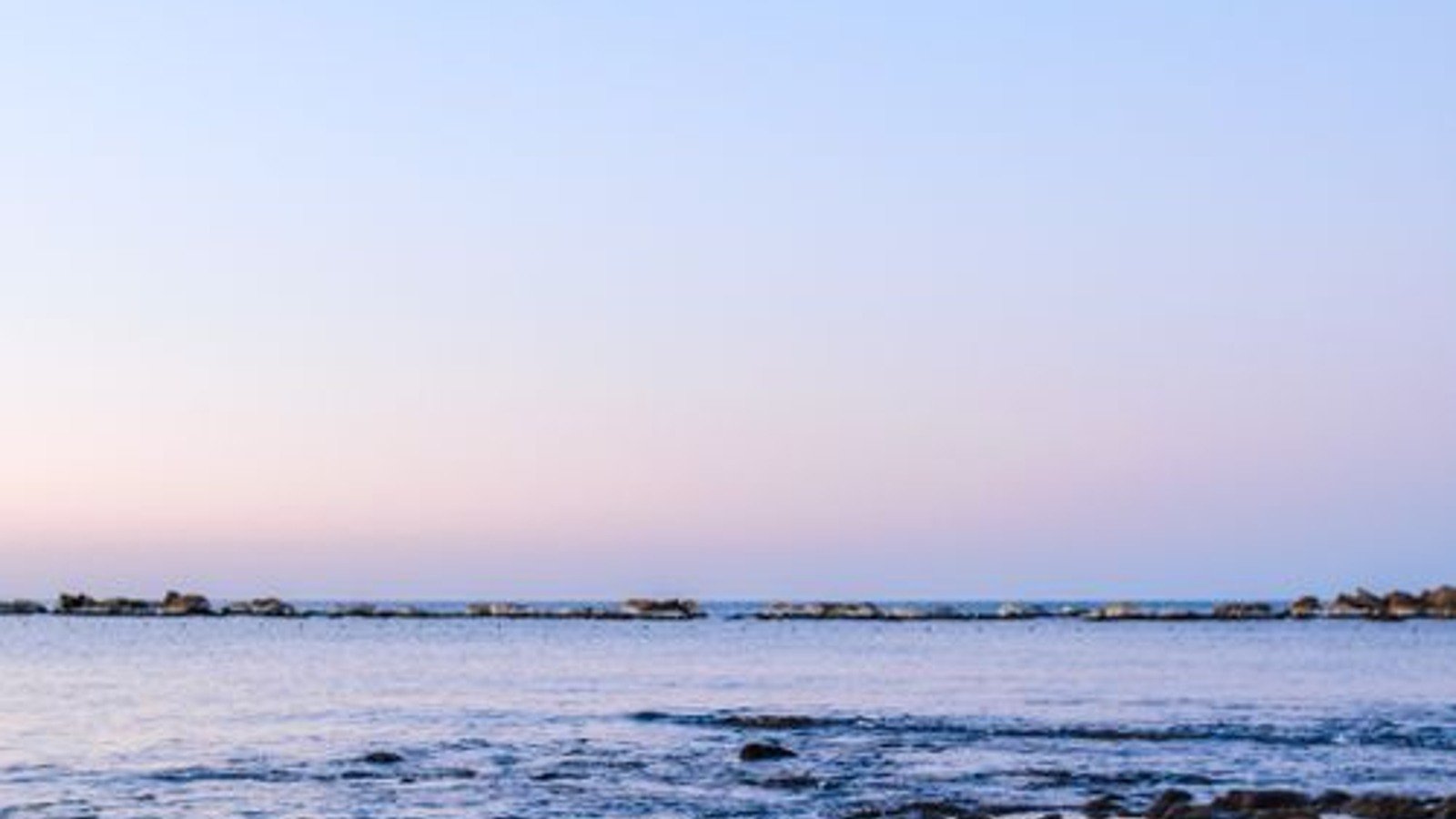

The beach offers texture underfoot, open space, a horizon, and water. These six practices are for a day by the sea, and they are meant to add to the day, not to turn it into a task.
1. Take the shoes off first
Walk slowly enough to feel the texture change: dry, packed, wet sand. Check for sharp objects and hot sand first; keep protective shoes on if safer, or if you have reduced sensation, circulation or foot problems, and follow your foot-care plan. Notice how your feet adjust on soft sand, and how the ankles and calves work. A slow ten-minute walk along the waterline is enough. Wet, packed sand is usually easier to walk on than loose dry sand.
2. Let the horizon widen your eyes
Look at the horizon with a soft gaze, nothing to accomplish. It can be a pleasant break for eyes used to screens. Let your eyes rest on the far line, then slowly notice what is at the edges of your vision, without moving the eyes. Sunglasses are fine for this, and sensible in bright light. Do not look at the sun.
3. Breathe with the waves if you like
If you like, let your breath follow the surf for a few minutes: in as the wave builds, out as it falls. Keep it comfortable and stop if dizzy. Never do breathwork in the water. There is no need to match the waves exactly. If the rhythm does not suit you, just listen to the sound and let your breathing do what it does.
4. Let the water have your weight
Floating, wading, or just standing knee-deep against the push: feel how the water holds you and pushes back at once. Do not rely on buoyancy to keep you safe: stay within a lifeguarded area and your ability, swim with a companion, swim between the flags where present, and never close your eyes or do breathwork in water. If the water feels like too much today, a quiet pause on dry land is a fine alternative.
Currents and waves can change quickly. Read local signs and conditions before entering. Active child and water supervision always comes first; being within reach is not a care handover. Do not use inward, absorbed, multisensory or breathing practices while responsible for supervision; arrange a capable handover first.
5. Feel the wind and sun as sensation, not weather
Keep assessing heat, wind, weather, tides and other hazards while briefly noticing the moving air on your skin, the sun on your shoulders. Tracking raw sensation without commentary is a core somatic skill. Stay safe in the sun while you do it. Let a few minutes go by like this, then come back to the day.
6. Watch something without filming it
The wave set, the bird working the shoreline, the light changing: watch one thing fully without photographing it. You can enjoy a moment without recording it. Take your photos first, then put the phone away only if a means of calling for help and required alerts remain accessible.
Planning the day so it stays pleasant
Go early or late if you can, when the light is softer and the sun is lower. Take more water than you think you will need, some food, a hat, and something to sit on. Choose a spot with some shade, or bring your own. Know where the lifeguards, toilets and exits are before you settle in. Check the tide times if the beach floods at high tide, and keep your belongings away from the waterline. If you are with children, agree on a meeting point in case you get separated.
Moving slowly on sand
Sand is uneven and the feet work harder, so walk at an easy pace and stop when you are tired. If you have foot, knee or balance problems, stay on firmer sand near the water’s edge or keep sandals on. Stretch the calves and feet after a long walk. Some people like to finish with a few slow minutes seated, looking out at the water, before packing up.
Sand, shells and small pleasures
Pick up a handful of sand and let it run through your fingers. Notice the weight and the temperature. Sit with your back against something solid and feel the ground take your weight. Eat something simple outside. Many people find that an hour of this does more for them than a long list of activities.
A note on the sun
The beach’s one rule is unglamorous: shade, hat, sunscreen, and limits in the midday hours. Drink water, since you may not notice thirst by the sea. Sunburn is not a souvenir.
Related: swimming as a body-awareness practice.
Further reading: 8 Somatic Practices to Do in Nature. These are optional reading, not a replacement for the safety or care instructions above.
