
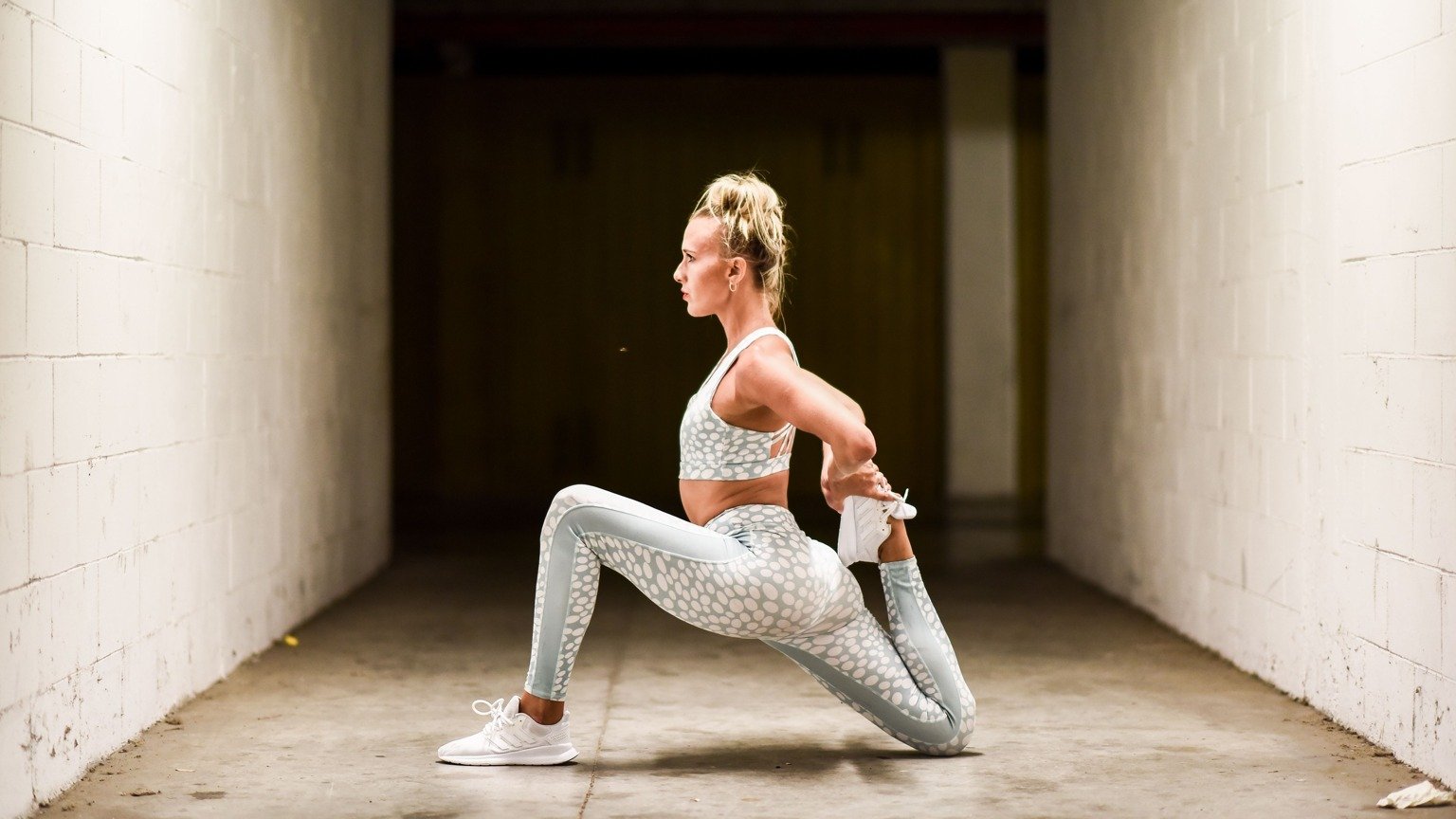

A stretch can become a small argument with a photograph. The person in the picture reaches further, so you reach further too. Somewhere along the way, your own comfort gets outvoted.
Somatic stretching takes a different starting point: notice a manageable movement and let the feedback influence what happens next. The aim here is not a deeper pose. It is a clearer choice about effort, range and stopping.
You do not need unusual flexibility to practise paying attention.
What makes somatic stretching different?
In this article, somatic describes an attention-led way of moving, not a separate medical treatment or a method proven to release trauma. You notice what a movement is like and adjust rather than chasing an external shape.
NHS flexibility guidance includes gentle movements and repeatedly uses comfortable range as a limit. It advises building up slowly. Its sideways-bend example slides a hand down one side of the body rather than requiring an elaborate pose.
The short experiment below borrows that simple movement idea and adds opportunities to pause and choose. It is not the full NHS routine, a rehabilitation prescription or a test of joint health.
Sensation gives information, not permission to push
A mild sense of lengthening and a sharp pain are not interchangeable instructions. Do not push through pain to prove that you are listening to the body. Sometimes listening means leaving the movement alone.
Sensation also has limits. Feeling comfortable does not establish that a movement is appropriate for a particular injury or condition. Follow any individual restrictions you have been given.
The NHS advises that people with an injury, medical condition or pregnancy may need changes to stretches and should ask a physiotherapist or healthcare professional which movements fit. Its stretching guidance is useful background, not a requirement to copy every illustrated shape.
Avoid stretching into a joint’s end range just because you can. This exercise has no flexibility target, and the two sides need not look the same.
The practice: a small sideways exploration
Purpose: Explore how a small movement changes effort and sensation, while keeping the option to stop.
Time: About two to three minutes including pauses, or less. One comfortable attempt on each side is enough. There is no need to hold a stretch for this experiment.
Position: Stand on a stable, clear surface with feet comfortably apart, knees not locked and arms resting by your sides. Keep eyes open. Have familiar support nearby if needed. If standing balance is uncertain, skip this version and seek a suitable individual alternative rather than improvising.
- Start without stretching. Notice the room and check that standing feels steady. If comfortable, notice ordinary contact through the feet. You do not have to scan the whole body.
- Choose a very small range. Let one hand slide a short way down the outside of its thigh as your trunk inclines a little to that side. Keep both feet supported. Do not twist or try to reach the floor.
- Stop before effort becomes a challenge. A tiny movement is enough. If it is uncomfortable, return rather than searching for a better sensation inside discomfort.
- Return gently. Come back to your ordinary standing position. There is no special breathing pattern and no need to time movement to an inhale or exhale.
- Take a pause. Ask whether you want to try the other side, make the movement smaller or finish. Different sides may have different comfortable ranges.
- Try once on the other side if wanted. Keep the same freedom to stop. A second repetition is optional, not progress you owe the exercise.
- Finish with an ordinary action. Sit, take a few comfortable steps or return to the day. Check steadiness before moving away.
Do not bounce, pull with the other arm or add an overhead reach to make the movement feel more impressive. The point is the feedback loop, not the silhouette.
What to notice
You might notice a mild lengthening along one side, effort in a leg, or a preference for a smaller movement. You might notice little at all. None of these responses needs a psychological explanation.
A difference between sides is an observation, not a diagnosis of imbalance or a clue to a hidden emotion. If it concerns you, ask a qualified professional rather than correcting it with repeated stretching.
You can also notice choice itself: “I returned before it became uncomfortable.” That is useful information even when flexibility is unchanged.
If it feels too much
Stop for pain, dizziness, tingling, numbness, unsteadiness or distress. Sit safely or choose another ordinary support. Do not try to stretch away a new symptom.
If symptoms persist, recur or concern you, get appropriate healthcare advice. New severe symptoms need urgent assessment. If body-focused attention increases detachment or anxiety, use external looking or listening instead, or leave the practice entirely.
Common mistakes: making a small practice into a performance
One mistake is assuming more sensation means more benefit. Another is using a mirror or photograph as the judge of whether a movement counts.
Avoid holding your breath to maintain the shape. If ordinary breathing becomes difficult, stop and return to a comfortable position. Do not force a deep breath as compensation.
Also avoid interpreting a yawn, tremble or emotional response as proof that trauma has left the tissues. This article offers a way to explore a simple movement. It does not identify the cause of a response or establish a treatment effect.
Integration: remember the useful adjustment
Ask one question afterwards: “What made the movement easier to choose?” Perhaps a shorter range, open eyes or stopping after one attempt helped. Keep the useful adjustment rather than making a rule to stretch further tomorrow.
Slow movement explores the pace of noticing. Postural awareness separates attention from policing alignment. Supported proprioceptive exercises look at position and support without requiring a large range.
If your day needs less doing, somatic rest is another option. Choosing a pause instead of a stretch can be a perfectly sensible response.
FAQ
Is somatic stretching a special treatment? Here it means an attention-led approach to an ordinary movement. This practice is not a treatment for trauma, pain or an injury.
Should I stretch as far as I can? No. Use a small comfortable range, avoid pain and follow individual healthcare advice. There is no end-range goal.
Do both sides need to match? No. Notice differences without forcing symmetry or diagnosing their cause. Seek advice for a difference or symptom that concerns you.
Can I keep moving if attention feels uncomfortable? You can stop, use external attention or choose another activity. Staying with discomfort is not required to complete the practice.
