
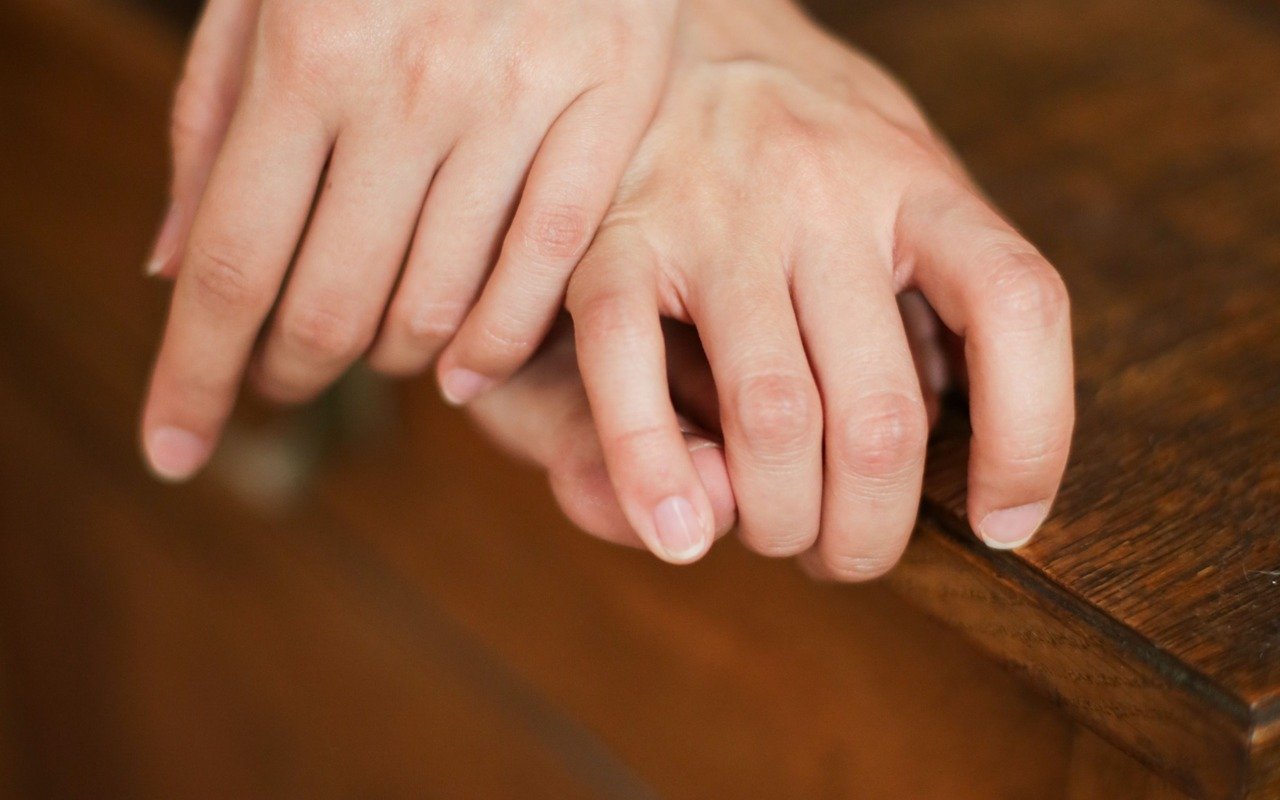

You reach for a pen, adjust your grip and bring it towards the page. Most of those small decisions happen without an internal meeting. Your position sense is doing useful work in the background.
Proprioceptive exercises draw attention to position, movement and the amount of effort used for a task. Some are part of clinical rehabilitation. Others are gentle explorations of familiar movement. Those are different things, and a short article should not pretend to provide an individual rehabilitation plan.
This practice uses a supported hand rather than a balance challenge. You do not need to stand on an unstable surface, close your eyes or prove how steady you are.
What you are exploring
Proprioception helps you sense where your body parts are and how they are moving. Information from muscles, tendons and tissues around joints contributes to that sense. Vision and other sensory information also help you move through the world.
Cleveland Clinic’s guide to proprioception describes how position and movement awareness supports everyday actions and how injuries or health conditions can affect it. The guide also distinguishes general awareness from exercises prescribed for particular difficulties.
You might notice the bend of a finger, the angle of a wrist or how much effort it takes to slide a hand. Those observations are more specific than an instruction to feel your whole body. They do not reveal your emotional history or diagnose the state of your nervous system.
For the wider explanation, read proprioception explained. Today the emphasis is on making a small movement, comparing experiences and stopping before effort becomes the main event.
Why supported movement is a useful starting point
A stable surface removes some demands. You can explore one hand without also managing balance, avoiding obstacles or wondering whether you will fall. Less to organise can mean more attention available for the chosen movement.
That does not mean seated work is medically appropriate for everyone. Pain, recent surgery, injuries, reduced sensation or neurological conditions may require individual advice. Use the guidance you have been given rather than replacing it with a general exercise.
The possible benefit here is clearer awareness of movement and effort. This is not a claim that one minute repairs proprioception, prevents falls or treats trauma. If your experience is unclear, the practice has still given you an honest answer: unclear today.
The practice: slide, stop, return
Purpose: Explore a small change in hand position and notice the effort involved, with support beneath the arm.
Time: One or two minutes. One movement may be enough to begin.
Position: Sit with your back comfortably supported. Rest your forearm and hand on a stable table at a comfortable height, or use your lap if that works better. Keep your eyes open. Do not lean forward to reach a surface that is too far away.
- Look around before beginning. Notice the table or your lap and the room beyond it. You are allowed to keep attention outside your body.
- Rest the hand loosely. Notice where the fingers are and whether the wrist is bent. Do not correct the position unless it is uncomfortable.
- Slowly slide the hand a few centimetres along the supporting surface, if this is comfortable. Choose a direction that does not strain the wrist or shoulder. Watch the movement.
- Pause. Notice the hand’s new position relative to your elbow. Does it feel closer, further away or difficult to describe?
- Slide back towards the starting place. It need not be the exact same spot. Compare the effort on the way out and back.
- If comfortable, repeat once with a smaller distance. Then let the hand rest and return attention to the room.
What to notice: Position, contact, pressure, effort, the difference between moving and resting, or no clear difference. You can describe one of these without naming an emotion.
If it feels too much: Stop moving. Leave the hand supported or change position. If paying attention to the hand increases distress, look at the room instead. Stop for pain, dizziness, tingling that is new or concerning, or any unusual symptom. Seek clinical advice when needed.
A second option: opening without stretching
If sliding is awkward, simply notice the resting fingers. Open them a little and let them rest again, within an easy range. Do not stretch them as far apart as possible or repeatedly clench the hand.
You might notice that one direction takes more effort. That is a description, not a conclusion about what is wrong. Everyday differences between sides and movements can have many explanations.
There is no need to do both options. The exercise is deliberately small. It is not secretly a workout wearing comfortable clothes.
Common mistakes
The first is removing support to make the practice more impressive. Closing the eyes, standing on one foot or using an unstable surface adds demands and can introduce a fall risk. Those are not progressions for this article.
The second is forcing precision. You do not have to return to an exact point or achieve a smooth movement. If you start grading yourself, reduce the task or finish.
Another mistake is using sensations as a diagnostic test. A hand feeling unfamiliar for a moment does not establish a disorder, and a clear sensation does not prove that every part of your movement system is working well.
Finally, avoid repeating a movement through pain because someone has said it is gentle. The word describes the intended approach, not a guarantee about your particular body.
When a different kind of help is needed
Repeated falls, persistent coordination problems, new changes in movement or difficulties after an injury deserve clinical assessment. A physiotherapist may provide a programme suited to the problem and your circumstances.
Sudden weakness, a sudden loss of coordination or other acute neurological symptoms require urgent medical help. Do not use a home awareness exercise to decide whether to wait.
If body-focused attention repeatedly makes you anxious or detached, a qualified practitioner can help you consider other approaches. You do not need to become good at this practice to deserve support.
Integration: take one description with you
Afterwards, finish with an ordinary sentence: the hand moved easily, the wrist felt effortful, or I could not tell much. That is enough. You do not need to monitor every movement for the rest of the day.
If small movement interests you, explore slow movement. If you would rather stay with external support, try grounding. Interoception explained helps distinguish position sense from internal signals.
Learning to offer choices and respect a person’s limits is part of somatic facilitator training at Parimukti. A useful practice does not need to look dramatic to deserve careful guidance.
FAQ
Are these exercises a treatment for poor balance? No. This is a supported awareness practice, not an individual balance or rehabilitation programme. Persistent balance difficulties need assessment.
Should I close my eyes to make it harder? No. Keep your eyes open for this practice. Removing vision is unnecessary and changes the task.
What if one hand feels different from the other? Note the difference without diagnosing it. Stop if it is painful or concerning; new or persistent functional problems need clinical advice.
How often should I practise? Try a short exploration when it suits you, and judge comfort rather than frequency. An individual rehabilitation schedule should come from the professional guiding your care.
