

A Simple Practice for Releasing Tension and Reconnecting With the Body
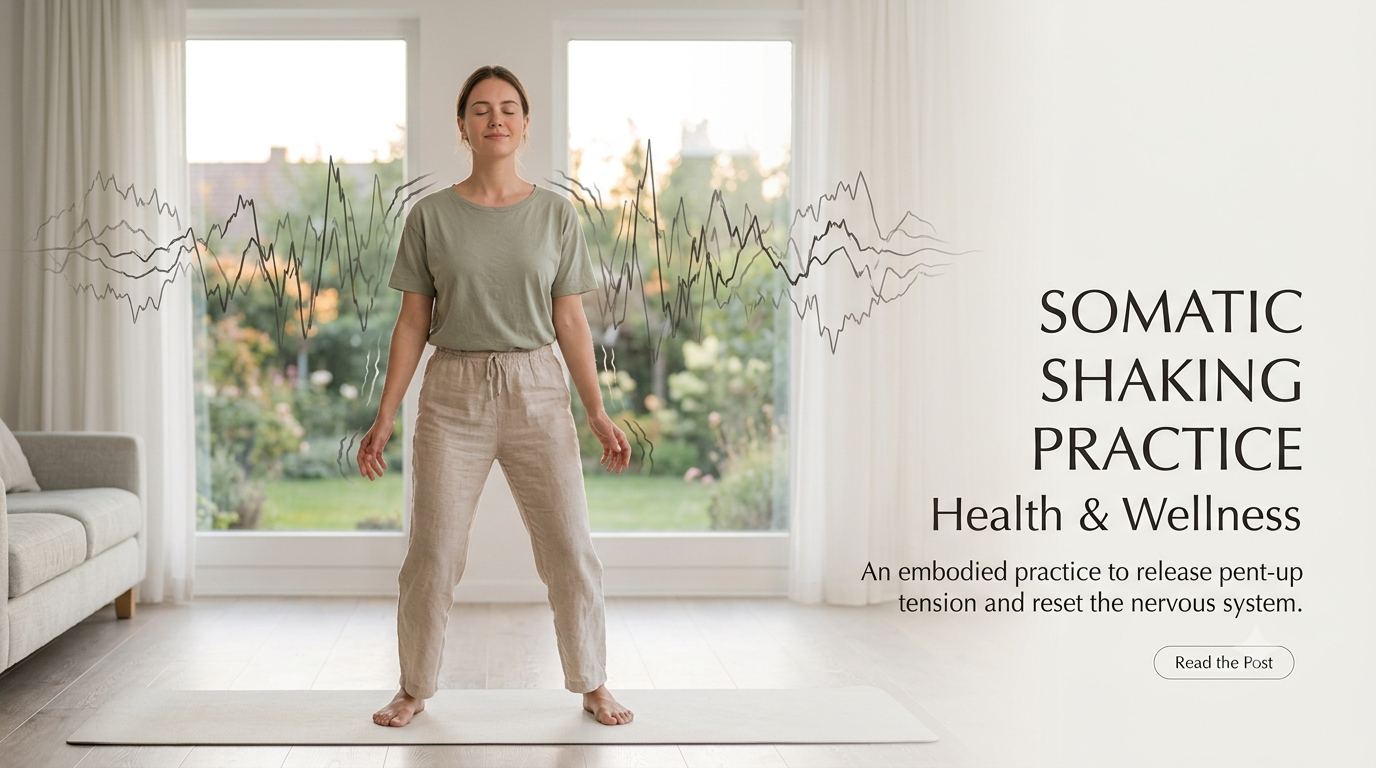
Somatic shaking is a simple movement practice that invites the body into gentle, rhythmic shaking and natural movement. It can be used to reconnect with physical sensations, soften muscular tension, shift stagnant energy and create a deeper sense of embodiment.
Shaking is a natural human response to intense physical or emotional activation. In a somatic practice, rather than suppressing movement, we consciously create space for the body to move while remaining present and aware.
The practice is simple: move, shake, breathe, notice and integrate.
How to Practice
Find a comfortable space where you can stand freely.
Stand with your feet approximately hip-width apart and allow your knees to remain soft.
1. Arrive
Close your eyes or soften your gaze.
Feel your feet against the ground.
Notice your weight, your posture and your natural breathing.
Take a few slow breaths without trying to change anything.
2. Begin the Movement
Start with a gentle bouncing movement through the knees and ankles.
Allow the movement to gradually become a light shake.
There is no need to make the movement dramatic. Begin softly and allow the body to find its own rhythm.
3. Allow the Shake to Travel
As the body becomes comfortable with the movement, allow the shaking to move naturally through the legs, pelvis, torso, shoulders and arms.
The hands can remain loose.
The jaw and face can soften.
Keep breathing naturally.
Rather than consciously controlling every movement, experiment with allowing the body to participate.
4. Explore
Continue for approximately 2–5 minutes.
Notice sensations as they arise:
- warmth
- tingling
- muscular movement
- changes in breathing
- lightness
- heaviness
- areas of tension
- increased physical awareness
- changes in emotional energy
There is nothing specific that needs to happen.
The practice is an invitation to become more familiar with the body’s language.
5. Come to Stillness
Gradually reduce the movement until you are completely still.
Stand quietly for a few moments.
Feel your feet.
Notice your breathing.
Notice the difference between movement and stillness.
6. Integrate
Allow the body to settle.
You may place one hand on the chest and one on the abdomen, or simply remain still and observe.
Notice what feels different now.
This final stage is an important part of the practice. The stillness allows awareness to catch up with the movement.
The Somatic Shaking Ritual
A simple ritual can be structured into three stages:
ARRIVE
1 minute
Ground through the feet.
Notice the breath.
Become aware of the body’s current state.
SHAKE
2–5 minutes
Allow gentle rhythmic movement to build gradually.
Let the movement become more spontaneous while maintaining awareness of the body.
INTEGRATE
1–2 minutes
Come completely still.
Feel the body from within.
Observe the breath, heartbeat, temperature, muscle tone and overall sense of presence.
The complete ritual therefore takes approximately 4–8 minutes.
Benefits of Somatic Shaking
Somatic shaking can be incorporated into a wellness practice to support:
Physical release
Gentle rhythmic movement can help bring awareness to areas of muscular holding and encourage the body to move out of habitual patterns.
Embodiment
The practice shifts attention away from constant mental activity and toward direct physical experience.
Stress regulation
Slow, mindful movement combined with awareness can create a useful transition from periods of activation into greater physical settling.
Emotional awareness
Movement can make subtle emotional sensations easier to notice and explore.
Energy and vitality
Shaking increases movement throughout the body and can create a feeling of aliveness and physical activation.
Grounding
Feeling the feet, weight and movement of the body provides a simple way to reconnect with the physical present moment.
Mind-body connection
The practice develops awareness of the relationship between physical sensation, movement, breath and emotional state.
What Makes It Somatic?
The important element isn’t simply the shaking.
It is the awareness while shaking.
A person can shake their body as exercise without engaging in somatic awareness.
In somatic practice, attention remains connected to sensation:
What am I feeling? Where do I feel it? How does it change when I move? What happens when I become still?
This transforms ordinary movement into an exploration of the body.
Facilitator Guidance
A facilitator can use simple invitations rather than directing every movement:
“Feel your feet connecting with the ground.”
“Let the knees soften.”
“Begin with a gentle movement.”
“Allow the movement to become a little more spontaneous.”
“Notice where you feel the movement.”
“There is no right way to shake.”
“Allow the body to move while keeping your awareness present.”
“Gradually come back to stillness.”
The facilitator’s role is to create enough structure for the participant to feel oriented while leaving enough freedom for individual bodily expression.
Recommended Timing
Beginning: 1–2 minutes
Regular practice: 2–5 minutes
Deep somatic session: 5–10 minutes
Integration: 1–2 minutes
For beginners, shorter sessions are often sufficient. As body awareness develops, the duration can naturally increase.
A Simple Daily Practice
A five-minute practice can be:
1 minute — Stand, breathe and feel the feet.
3 minutes — Gentle full-body shaking.
1 minute — Become completely still and observe.
The practice can be particularly useful as a transition between mental activity and meditation, breathwork, yoga, journaling or other forms of inner work.
The Essence of Somatic Shaking
Somatic shaking is ultimately an invitation to move from thinking about the body to experiencing the body.
Shake gently.
Breathe naturally.
Feel the movement.
Allow stillness.
Notice what has changed.
The body doesn’t always need another instruction. Sometimes it needs space to move, feel and be noticed.
