
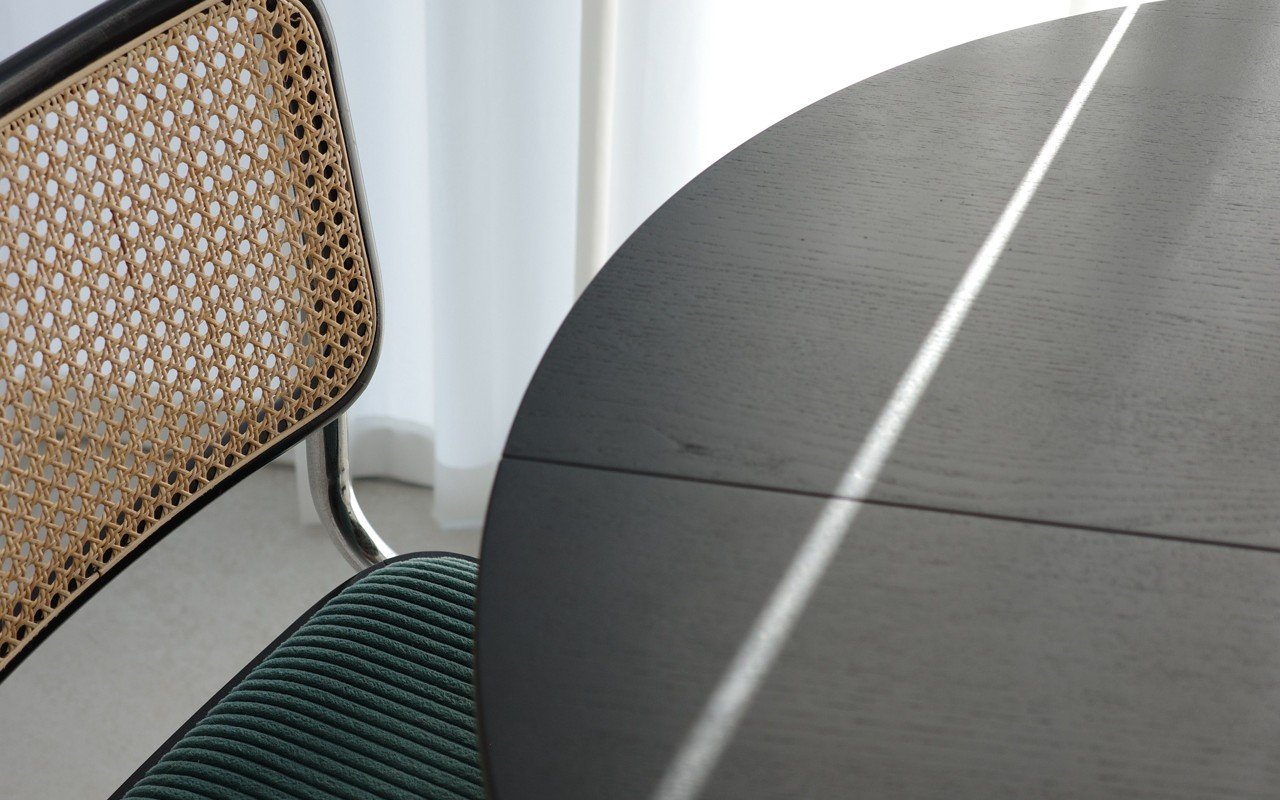

You have answered three messages, started two tasks and forgotten why you came into the room. Before you organise the rest of your life, it may help to notice where you are sitting.
A somatic centering exercise can be a short pause to recognise support, position and choice. It does not require an ideal posture or an invisible point you are supposed to discover inside yourself.
Here, centering means gathering attention around an ordinary reference: the chair, the floor and the room you are in. It is a practitioner term, not a medical treatment or a measurement of nervous-system function.
Physical centre and felt centre are different ideas
In everyday language, people may describe themselves as centred when they feel less scattered or more able to choose their next action. That description is personal. It does not establish that their body is in a particular physiological state.
A physical balance task is different. Standing, shifting weight or recovering balance involves movement and sensory information. This article is not a balance test or a programme for preventing falls.
The seated practice below reduces those demands. If sitting is not comfortable or available to you, use an already-supported position that fits your circumstances, or simply notice an object in the room. You do not have to make your body match the picture.
For the sensory side of movement and position, proprioception explained provides a separate introduction. We are using a much simpler question today: what support is already here?
Why centering might be useful
A pause can interrupt the habit of moving straight from one demand to the next. You may notice that you are perched on the edge of a chair, gripping the phone or holding an awkward position. You can then decide whether an adjustment would help.
Some people find a clear physical reference less demanding than a full body scan. Others prefer a sound or a visible object. These are options, not steps on a ladder towards better embodiment.
The possible benefit is a little more awareness before the next action. There is no promise that the exercise will restore emotional balance, improve posture or make a busy day manageable on its own. Sometimes you need fewer tasks, not a more attentive relationship with the chair.
The practice: three points of reference
Purpose: Recognise available support and make one comfortable choice before returning to your day.
Time: One or two minutes. Finish sooner if the pause stops being useful.
Position: Sit in a stable chair with your back supported if comfortable. Let your feet rest on the floor or an appropriate foot support. Keep your eyes open. If this position is not suitable, use your existing support rather than forcing a change.
- Look at something in front of you. Notice where it is in relation to your chair. This is your first reference, outside your body.
- Notice the chair supporting you. You do not need to feel every contact point. One clear place, or the knowledge that the chair is there, is enough.
- Notice the support beneath your feet, if accessible and comfortable. Do not press down hard or try to make both sides feel identical.
- Ask whether one small adjustment would be useful. You might lean into the backrest, move the phone closer or release an unnecessary grip. You may also choose not to change anything.
- Pause after that choice. Describe one ordinary difference, or no difference. There is no need to straighten yourself into an impressive sitting position.
- Look back at the room. Choose the next task, or decide to take a longer break. Let the exercise end rather than trying to preserve a feeling of being centred.
What to notice: Contact, ease, effort, the room around you and whether an adjustment is comfortable. Uneven pressure is an observation, not evidence of emotional imbalance.
If it feels too much: Return attention to the object. Stop adjusting your position, rest or change support. Stop for pain, dizziness, new tingling or other concerning symptoms. Seek individual advice where needed.
No compulsory belly focus
Some centering practices direct attention towards the lower abdomen. That may be comfortable for some people, but it is not essential here. Body-focused attention can also feel intrusive, unclear or difficult.
You do not need to touch your abdomen, close your eyes or control your breathing. Looking at the table can be a complete practice. There is no secret bonus for feeling something deep inside.
If you have an injury, recent surgery, reduced sensation or a condition affecting movement, follow your clinician’s guidance about positioning and activity. A general instruction to sit comfortably is not an individual recommendation.
Common mistakes
The first is treating centering as posture correction. Pulling the shoulders back, tightening the abdomen and sitting rigidly can add effort rather than reveal support. Choose comfort instead of a prescribed shape.
Another is demanding symmetry. Chairs, bodies and daily habits vary. Do not force equal pressure or use a difference to diagnose a problem. Persistent pain or functional difficulty deserves appropriate assessment.
It is also easy to chase the feeling from a previous practice. Yesterday may have felt clear; today may feel ordinary. Neither experience has to become a verdict on how well you are doing.
A final mistake is making centering a prerequisite for everything. You can send a message, ask for help or take a break while feeling scattered. The exercise should not become another item you must complete correctly before being allowed to live your day.
If you prefer movement
You can finish the seated pause and move into an ordinary activity. There is no need to add swaying, standing with closed eyes or balancing on one foot as a progression.
Slow movement offers a separate, modest exploration. Grounding through the feet discusses a standing option and its limits. Choose a practice that fits your physical circumstances rather than assuming standing is better.
If noticing your body repeatedly increases distress or detachment, use external attention and consider support from a qualified practitioner. More inward attention is not automatically the answer.
Integration: one choice you can use
You might finish with: I moved the screen closer and stopped leaning forward. Or: I did not notice much physically, but I chose one task instead of five. Either is a useful record.
External grounding offers another way to begin. For people interested in guiding these practices, somatic training at Parimukti introduces the wider skills of offering choices and respecting limits.
You do not have to remain centred all afternoon. The chair is not issuing a performance review.
FAQ
Is centering a scientific test of regulation? No. It is a practitioner description for a way of gathering attention, not a diagnostic measure of your nervous system.
Do I have to focus on my lower abdomen? No. You can use the chair, a visible object or another comfortable source of support instead.
Should both feet feel exactly the same? No. Do not force symmetry or interpret a difference as an emotional problem. Seek advice for persistent pain or functional concerns.
Can I do this lying down? You can notice support in an already-comfortable lying position. This article does not require sitting or standing if those positions are unsuitable.
