
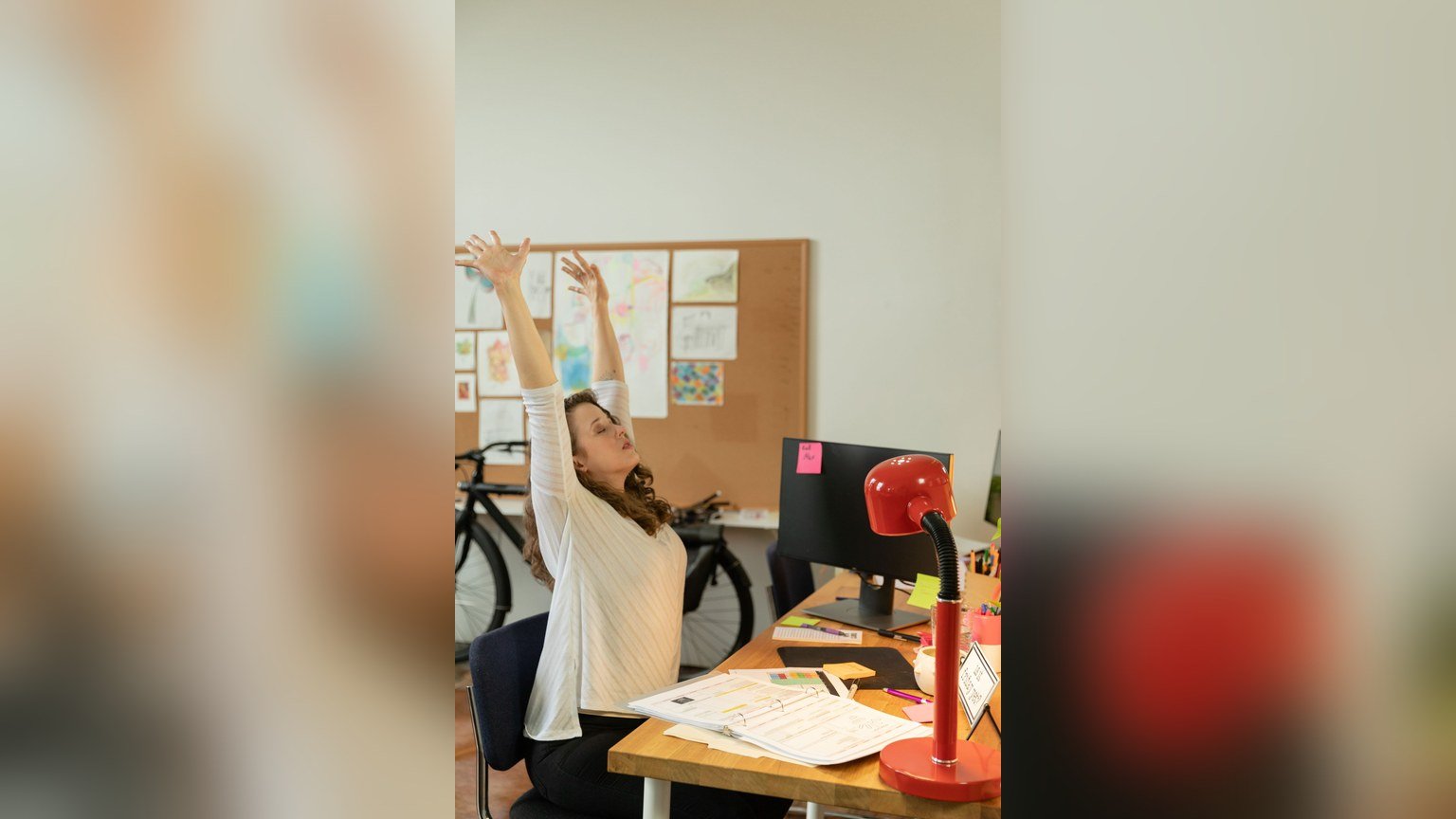

The leg that starts bouncing under the table. The walk to the kitchen you do not remember deciding to take. The evening where you sit down to rest and are somehow on your feet again ninety seconds later, doing nothing in particular with great commitment.
Restlessness in the body is one of the most common and least discussed forms of activation. It rarely gets the drama of panic or the sympathy of exhaustion. It just makes stillness feel impossible, and it tends to come with a quiet self-criticism: what is wrong with me that I cannot even sit down?
Usually, nothing is wrong. Restlessness is often the body doing something sensible with energy it has nowhere to put. This article looks at what is going on, offers a short practice that works with the energy rather than against it, and covers the situations where restlessness deserves professional attention rather than another exercise.
What restlessness actually is
The NHS lists an inability to relax among the common symptoms of anxiety, alongside physical signs like a faster heartbeat, sweating and tension. When you feel threatened or pressured, the body releases stress hormones such as adrenaline and cortisol. Those hormones are preparation for action: muscles primed, attention narrowed, fuel mobilised.
The trouble is that modern stress rarely involves the action. The deadline does not chase you through the trees. The difficult email does not require you to fight anyone. So the preparation has nowhere to go, and it shows up as the tapping foot, the pacing, the constant repositioning. From this angle, restlessness is not a malfunction. It is mobilisation without a mission. If you have read about recognising nervous system activation, restlessness is one of its most ordinary costumes.
This framing matters because it changes the strategy. If restlessness is energy looking for an exit, then forcing stillness is arguing with physics. The more promising move is to give the energy somewhere to go, on purpose, and then let settling happen as a consequence rather than a demand.
Common causes worth ruling out
Stress and anxiety are the usual suspects, but not the only ones. A few others deserve a mention:
Too much sitting. A body that has been still all day may simply be asking for movement, in the same way a hungry body asks for food. The answer is movement, not discipline.
Caffeine, poor sleep, and blood-sugar dips. All three can produce a jittery, driven feeling that has little to do with your emotional life.
Medication. This one matters. Some medicines, particularly antipsychotics, can cause a side effect called akathisia: an intense inner restlessness where you feel unable to keep still, rocking, pacing or constantly moving your legs. The mental health charity Mind points out that this can be mistaken for anxiety, and that increasing the dose does not help. If restlessness began or worsened after a medication change, tell your prescriber. Do not stop the medication on your own, but do raise it: this is a known, treatable side effect, not a character flaw.
Genuine emotional activation. Sometimes something underneath wants movement: grief, anger, anticipation. The practice below works here too.
A practice: move first, then settle
The logic is simple. Meet the energy where it is, spend a little of it deliberately, and only then invite stillness. Ten minutes, no equipment, no audience required.
Stand up and let it move. Instead of suppressing the restlessness, give it a job. Pace the room on purpose. Let your arms swing. If your legs want to bounce, let them bounce, standing, with commitment. You are not being silly; you are completing the mobilisation your body already started. Our article on completing the stress cycle goes deeper into why this works and where its limits are.
Exaggerate, then begin to slow. After a minute or two, make the movement slightly bigger, then begin turning the dial down. Slower pacing. Smaller swings. This is the crucial step: you are showing the body the way towards stillness rather than teleporting there. Forcing a restless body into a chair and demanding calm is like slamming brakes on a motorway. Downshift through the gears.
Arrive at the feet. When the movement has spent itself a little, stop and put your attention in your feet. Feel the floor. Notice that you are, in fact, being held up by something solid. Grounding techniques like the well-known 5-4-3-2-1 senses exercise, recommended by NHS services, work from the same principle: attention anchored in present physical reality leaves less room for the spin.
Add a slow breath if it helps. The NHS calming breath for stress is as simple as breathing in gently for a count of up to five and out for a count of up to five, for a few minutes, without forcing depth. Keep it easy. If breath focus makes you more agitated, skip it; gentle vs intensive breathwork explains why softer is often the right dose, and why breath is always an option, never an obligation.
Walk it out when sitting fails. Some days the honest answer is a walk. Somatic walking turns exactly this situation into a practice: movement with attention, which is often what restlessness was asking for all along.
What settling actually feels like
A note of realism: the goal is not a perfectly still, serene body. After moving and grounding, most people find the restlessness drops a few notches, from shout to mutter. That is a win. It may return in waves; meet each one the same way, without commentary. Arguing with the waves is just more activation.
When restlessness needs more than an exercise
Please take this section seriously, because exercises have limits and restlessness occasionally signals something that deserves care:
- If restlessness started or worsened with a new medication or a dose change, contact your prescriber.
- If it comes with a racing heart, breathlessness or feeling faint that worries you, get medical advice.
- If anxiety is affecting your life and self-help is not enough, the NHS advises seeing your GP, and in England you can refer yourself directly to NHS talking therapies without a GP appointment.
- If you are in crisis, Samaritans are available any time on 116 123 in the UK and Ireland.
An article can hand you a practice. It cannot assess you, and persistent restlessness deserves someone who can.
FAQ
Is restlessness always anxiety? No. Anxiety is a common cause, but so are too much sitting, caffeine, poor sleep, excitement and some medications. If it began with a medication change, speak to your prescriber before assuming it is emotional. Restlessness is information, not a verdict.
Should I force myself to sit still until it passes? Usually not. Stillness demanded of a mobilised body tends to bounce back harder. Moving deliberately first, then slowing gradually, matches how activation actually resolves, and makes the stillness that follows genuinely restful rather than clenched.
Why is my restlessness worse at night? During the day, movement and tasks absorb activation; at night there is nothing left to carry it. A short deliberate movement practice before bed, plus a grounding exercise, often helps more than lying still and negotiating with the ceiling.
Can walking really count as a somatic practice? Yes. Walking with attention to sensation is one of the oldest regulation practices there is, and for restlessness specifically it gives the mobilised energy a constructive route. Ten attentive minutes outdoors regularly outperforms an hour of fighting yourself on a cushion.
Restlessness stops being an enemy once you read it as energy asking for direction. Give it somewhere honest to go, slow down in gears rather than all at once, and let stillness arrive when it is ready. If you would like to explore practices like these with guidance, you are welcome to browse our other articles or learn about our somatic teacher training.
