
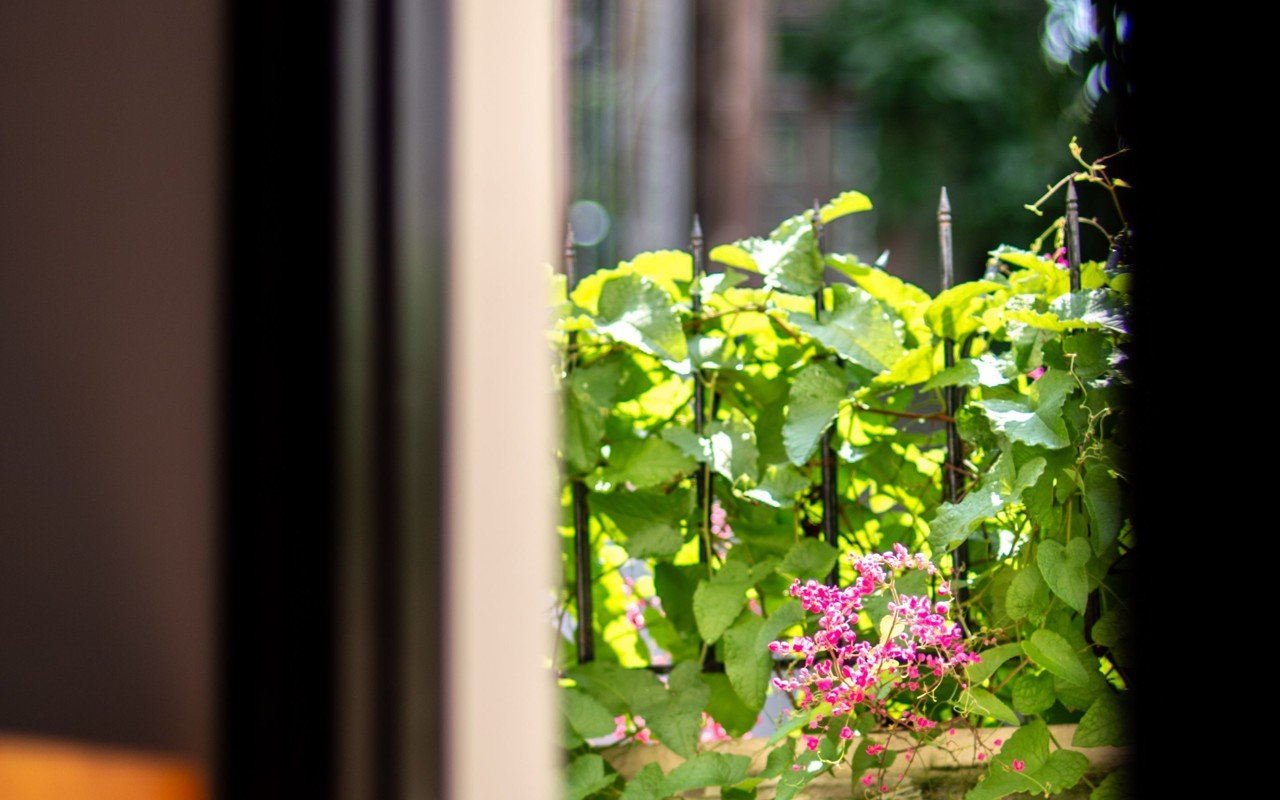

Some people find gardening calming; others experience it as work with prettier surroundings. The reasons differ, including conditions, workload, preferences and attention; no single explanation fits everyone. Six ways to garden with attention rather than as a chore list. No plot required, no experience either, and no particular feeling is the goal.
1. Start with the soil, literally
Before the tasks: hands on the soil, thirty seconds. The temperature, the texture – crumbly or dense, damp or dusty – the smell. That is the whole practice at first: contact.
Use gloves where appropriate, avoid sharp debris, and wash your hands afterwards. Soil is mostly friendly, but it is not sterile, and there is no prize for bare-handed contact if gloves make more sense.
2. Move at plant speed
Nothing in a garden can be rushed. Seedlings do not respond to deadlines, weeds do not pull faster because you are irritated, and watering works at its own pace. Try taking the tasks at the garden’s speed rather than yours – weeding slowly, watering deliberately, at whatever pace suits your body that day.
If you notice yourself yanking rather than pulling, that is useful information: the hurry has arrived. It usually belongs to the rest of your day, not to the garden.
3. Use the rhythm jobs as meditation
Weeding, raking, deadheading, watering a row of pots – the repetitive tasks are the garden’s rhythm section. Let the rhythm carry your attention the way counting breaths might elsewhere, and when your mind wanders off to the inbox, return to the next weed, the next stroke, the next pot.
How long: even ten minutes of one rhythm job is a complete session. You do not need to finish the bed. The bed will still be there, cheerfully unfinished, tomorrow.
4. Take the sensory tour
Once per session, stop working entirely. Look without touching unfamiliar plants. Only handle a familiar plant known to be safe for your skin, using appropriate gloves and care. Do not rub or crush unidentified, toxic or irritating leaves. Listen for what is moving: birds, insects, wind in stems. Look at one flower properly, the way you would look at a painting you actually wanted to see.
An orienting tour of your own garden is a way of noticing what you enjoy – while still checking the practical hazards, because a garden admired is lovely and a garden fork stood on is not.
What to notice: how different the garden is at this speed. Most of it is invisible at chore pace. At standing-still pace, the place turns out to be full of events – things blooming, things being eaten, a spider with opinions.
5. Let the body work honestly
The squat, the lift, the dig, the reach – gardening involves real movement, and feeling it is part of the practice. Notice which muscles are doing the job. Notice, too, when the job starts doing you: the lower back registering an opinion, the knees negotiating.
Take that seriously. Avoid heavy lifting or prolonged awkward positions; change sides, change tasks, stand up regularly. There is no need to exhaust yourself for a benefit. The garden is not impressed by heroics, and your back will file a complaint the next morning.
6. Bank the small visible wins
The cleared bed, the new shoot, the thing that survived your care – pause and take it in before moving to the next task. Ten seconds is enough. Tending something that grows and seeing the result can be quietly satisfying in itself.
Common mistake: ending every session with the list of what is still wrong. The undone will still be visible tomorrow. Let the done get a moment first.
No garden required
A balcony pot, a windowsill of herbs, one houseplant watered and noticed – tending works at any scale. A single pot of basil, properly attended, offers every practice on this page except the digging.
If you are starting from zero: one container, one herb you actually eat, somewhere sunny. Water when the top centimetre of soil is dry. That is the entire instruction set – the practices above are about how to be there while you do it.
When gardening becomes another chore
The sign is familiar: the list gets longer than the light, and the garden turns into one more place where you are behind. When that happens, shrink the session rather than abandoning it – ten minutes on one bed, one pot, one small corner. Done at attention pace, ten real minutes beats an hour of resentful efficiency.
And some days the practice is simply not gardening. The plants will manage. They were doing this long before anyone made a hobby of it.
Related: cleaning as moving meditation.
Further reading: 8 Somatic Practices to Do in Nature. These are optional reading, not a replacement for the safety or care instructions above.
