
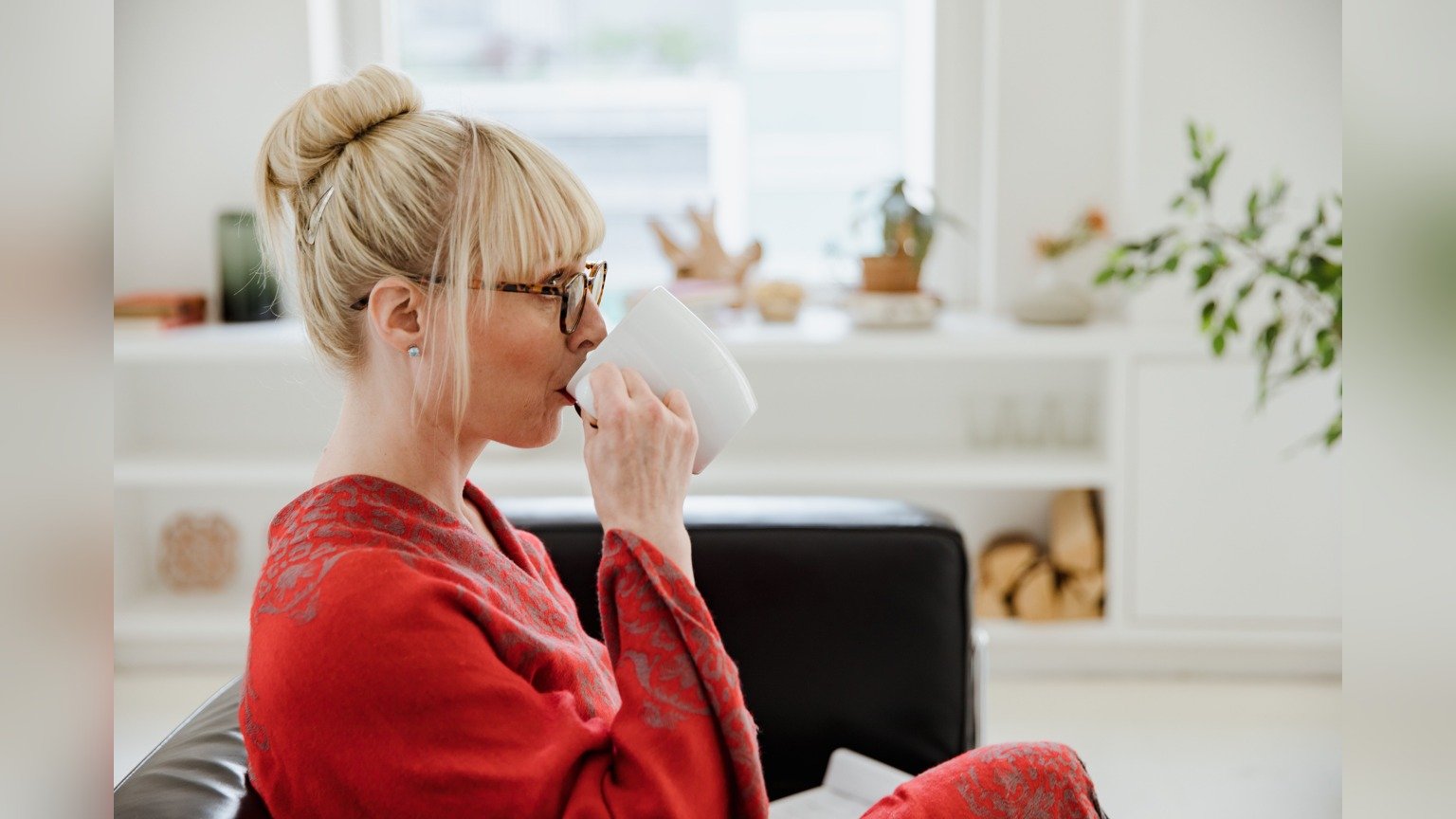

You arrive home, but the last conversation has arrived with you. Your shoes are off; your attention is still composing the reply. Even a quiet room can feel like another place where you ought to be doing something better.
To reconnect with your body, you do not have to find a hidden emotion or become beautifully calm. You can begin by noticing one ordinary detail and making one practical adjustment.
This is a short transition for a manageable day, not a treatment for trauma or a requirement to feel your way through distress alone.
Reconnection is not a special state
Here, reconnecting means giving some attention to immediate experience and letting it inform a choice. You might notice that your sleeve feels tight, that sitting would be welcome or that you need food before another exercise.
You may still feel distracted afterwards. A useful pause does not need a dramatic before-and-after story.
The NHS mindfulness guide describes attention to what is happening inside and outside ourselves. It includes ordinary sensory experiences and awareness of thoughts, rather than making thoughts disappear. It also says mindfulness does not help everyone and can make some people feel worse.
That last point belongs inside the practice, not in small print. Looking at the room can be enough. You can choose not to turn inward.
Before you reconnect with your body, check the situation
A body-aware pause should not replace meeting a straightforward need. If you are hungry, cold, in pain or dealing with an urgent responsibility, attend to that first. If you are somewhere unsafe, seek practical protection rather than trying to feel safe in place.
Choose a familiar position you can enter and leave comfortably. Do not practise while driving, cooking something that needs attention or supervising a safety-critical activity.
You do not have to announce a perfect evening routine. Putting a bag down and deciding what needs attention next is a reasonable beginning.
The practice: arrive, adjust, choose
Purpose: Make a brief transition from the day’s demands to an ordinary present need.
Time: Two to four minutes, or less. You can finish after the first step.
Position: Sit in a familiar supportive chair, or stand with stable support if that is more comfortable. Keep eyes open if preferred. Breathing can remain ordinary throughout.
- Let the room be part of the pause. Notice a familiar colour, object or sound. You do not need to catalogue every sense or prove that you are present.
- Put one activity down. Set the phone aside if appropriate, stop composing the reply or pause a non-urgent task. Thoughts may continue. You are not promising to empty your head.
- Notice one everyday point of contact, if welcome. Perhaps a forearm resting on the chair or fabric against a hand. If body attention is uncomfortable, stay with looking or listening instead.
- Make one practical adjustment. Change a cushion, loosen a restrictive layer or sit differently. Avoid pressing on an uncomfortable area to force it to soften.
- Ask a plain question. “What would help with the next ten minutes?” Food, water, movement, company, less input or practical help are all possible. There may be no immediate answer.
- Choose one next step. Do it at a comfortable pace. You may finish the pause still tired or stirred up. The choice does not need a calm feeling to authorise it.
This sequence is an everyday experiment. It is not a clinical protocol or a short substitute for a structured mindfulness programme.
What to notice
You might notice a preference for more support, a desire to move or the simple fact that you have been holding something for too long. You may notice no clear sensation.
Describe what is there without assigning a fixed meaning. “My hand is warm” is an observation. “My hand proves I am finally regulated” adds a conclusion the sensation cannot establish.
The useful change may be practical: you remembered to eat, asked for company or stopped trying to turn rest into homework.
If it feels too much
Stop if the pause increases pain, dizziness, distress or detachment. Return to ordinary surroundings and an activity or supportive interaction that is manageable. No breakthrough is waiting at the point where you ignore the stop signal.
Guy’s and St Thomas’ MBSR guidance tells readers to stop painful or uncomfortable exercises and discuss them with their doctor or trainer. You do not need to copy its longer practices to take that limit seriously.
If disconnection, exhaustion or distress persists or affects daily life, seek appropriate professional support. New severe physical symptoms, fainting, severe breathlessness or chest pain need medical attention rather than a stress explanation. Immediate danger or risk of harm needs urgent local help.
Common mistakes: asking the pause to finish the day for you
One mistake is expecting a few minutes to remove every demand. Another is assuming that a good practice should reveal why you feel the way you do.
You do not need to review the most difficult moment of the day. Avoid using sensations to reconstruct memories or decide that an event must have happened in a particular way.
Also avoid extending the exercise because nothing changed. The ability to leave it is part of making the practice fit you.
The NHS stress guide includes practical steps such as breaking down tasks and seeking support. A softer shoulder cannot replace a manageable workload, a clear boundary or help with something that is genuinely too much.
Integration: keep the adjustment, not a score
Later, remember one detail if useful: “The chair helped,” “I preferred a short walk,” or “I needed dinner, not another technique.” There is no need to rate your success at inhabiting a body you have been living in all day.
Somatic rest leaves room for a pause without demanding stillness. The evening routine offers a transition without promising sleep. Postural awareness explores comfort without perfect alignment, and co-regulation considers supportive contact without asking someone to fix a feeling.
Start with the option that asks less of you. Reconnection can be ordinary enough to fit between putting down your bag and deciding what is for dinner.
FAQ
Do I have to feel relaxed afterwards? No. The aim is a manageable moment of attention and a practical choice, not a required state.
What if I cannot notice a body sensation? You can use an external colour, object or sound. There is no need to search harder or interpret the absence of a clear sensation.
Should I replay the stressful event? Not for this practice. Stay with the present and avoid self-directed trauma recall or memory recovery.
When is more support needed? Persistent disconnection, exhaustion or distress affecting daily life deserves professional support. Concerning severe physical symptoms or immediate danger require appropriate urgent help.
