
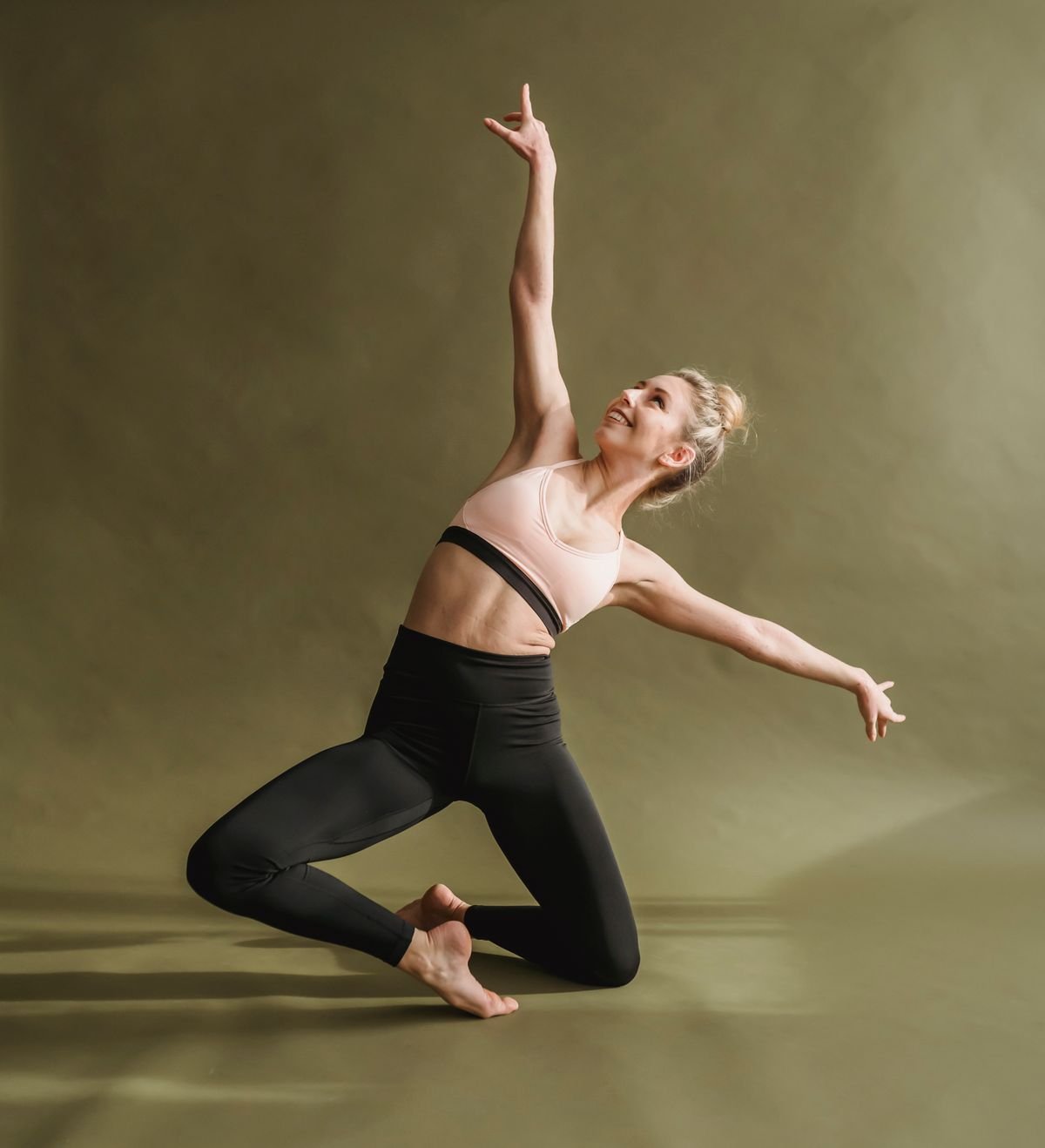

There is a particular kind of frustration in trying to explain a feeling that will not sit still in language. You circle it, you name three approximations, you say “I don’t know, it’s just… heavy” – and the words land like clothes on a mannequin, roughly the right shape and somehow not the thing itself. Long before we had sentences for sadness, we had shoulders that dropped, arms that pushed away, chests that opened or caved. Movement is the older language, and sometimes it is simply the more honest one.
This is not an argument against talking. Words are marvellous for organising experience and sharing it. It is an argument for not demanding that every feeling pass through the narrow gate of verbal description before it is allowed to exist or to move.
Feelings are physical events first
Whatever your preferred model of emotion, the sequence is hard to argue with: something happens, the body responds – muscles ready, breath shifts, face arranges itself – and the story-making mind arrives moments later to explain what just occurred. Anger is heat and forward pressure before it is a grievance. Joy is expansion in the chest before it is a reason. Grief is a heaviness in the arms and throat long before it is a narrative about loss.
Which means emotions are not just expressed by movement; in a real sense they are movement, or at least movement that was prepared and then, often, suppressed. The clench you did not throw, the reaching you did not complete, the dance you absolutely did not do at your desk – these unfinished actions can linger in the body as tension, restlessness, or a vague sense of being “full”. We explored a piece of this in emotions stuck in the throat, where unexpressed feeling collects quite literally in the muscles of speech.
What the research does and does not say
Dance and movement approaches have attracted serious research attention, and the honest summary is encouraging but modest. A 2014 meta-analysis by Koch and colleagues, looking across controlled studies of dance movement therapy and dance, found reliable medium-sized effects on quality of life, mood and body image – real effects, though the authors noted the study quality was uneven. That is the pattern across this field: people consistently report and show benefit, and the trials are small, varied and hard to blind. So movement-based emotional expression is a reasonable, evidence-informed practice – not a proven treatment, and definitely not a replacement for therapy when therapy is what is needed.
The practitioner traditions go further. Authentic Movement, a practice developed within dance movement therapy, has a mover follow inner impulse with eyes closed while a witness simply watches – the premise being that the body, given room, says what needs saying without choreography. Somatic approaches frame expressive movement as completing suppressed actions: the push, the reach, the shake. These are frameworks rather than settled science, but they are useful lenses, and they share one practical insight: expression is a bodily event, and the body likes to finish what it starts.
A simple practice for wordless feelings
You do not need a studio or a witness. You need ten minutes and a closed door.
Start by finding the feeling’s address. Not its name – its postcode. Where in the body is this thing? Chest, jaw, belly, fists? Put a hand there if that helps. Then ask a better question than “what am I feeling?”: what does this place want to do? Push, pull, curl, shake, stretch, stomp, reach? The first honest answer is often small and slightly surprising.
Let it move – at 30 per cent intensity. If the shoulders want to push, push against a wall, slowly, and feel every muscle joining in. If the arms want to sweep wide, let them, following the impulse the way you would follow a melody rather than executing a drill. We call this moving from the inside out, and it is the same principle behind expansive and contractive movement: the shape matters less than the fact that it is coming from the actual sensation.
Stay curious rather than theatrical. This is not a performance of emotion – nobody is watching, and “doing” anger in big gestures is just as much of a costume as suppressing it. Small, true movements beat large, invented ones. If what arises is frustration rather than grand emotion, perfect. Frustration moving through the body is the whole game.
Close by coming back. Shake the hands out, feel your feet, look around the room and let your eyes land on something ordinary. Give the experience one sentence at most – “that wanted to push” is plenty. The meaning-making can take the rest of the day; the body has already said its piece.
What tends to happen
Most people are surprised by two things. First, how specific the impulses are once they stop asking for names – this anger lives in the forearms, that sadness behind the ribs. Second, how much lighter a feeling becomes after it has moved a little, even when nothing about the situation has changed. The feeling was never the enemy. It was mail sitting unopened in the hallway, and opening it turned out to be a physical act.
FAQ
Can movement really express emotions that words cannot? Often, yes. Emotions begin as bodily responses before they become verbal stories, so letting the body complete its natural gestures – pushing, reaching, curling – can express and settle feelings that resist description.
What is movement-based emotional expression called? Professionally, it sits within dance movement therapy and somatic practices like Authentic Movement. A 2014 meta-analysis found moderate benefits of dance movement approaches for mood and quality of life, though study quality varies.
Do I need to know what I am feeling before I move? No – that is rather the point. Find where the feeling lives in the body, ask what that place wants to do, and follow it. Understanding often arrives after the movement, not before.
Is expressive movement the same as exercise? No. Exercise works the body from the outside in; expressive movement follows sensation from the inside out. Ten minutes of honest, slow movement counts more than an hour of going through shapes.
What if strong emotion comes up when I move? Slow down, open your eyes, feel your feet, and let the practice end early. Movement can loosen held feelings; if big material keeps surfacing, that is work for a qualified practitioner, not a solo living-room session.
