
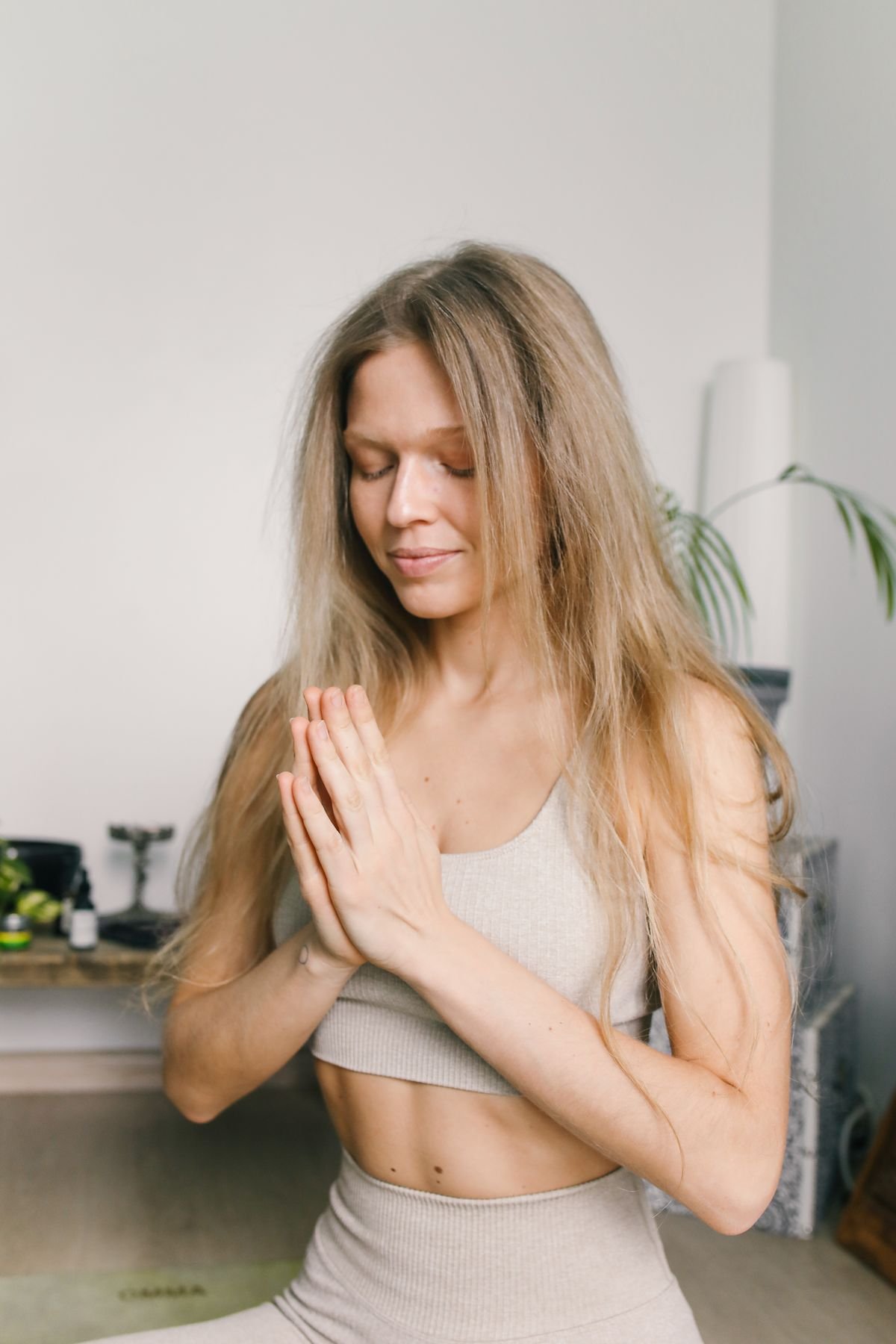

A classic body scan can run thirty or forty-five minutes, and for many people that is precisely why it never happens. The good news: a shorter scan is still a body scan. Attention does not need a stopwatch to work, and a scan you actually do beats a long one you avoid. Six short versions, from ninety seconds to two minutes.
1. The three-stop scan: feet, hands, face
Three places, thirty seconds each. Feel your feet first – the contact with floor or shoe, temperature, pressure. Then your hands – the palms, the fingers, whatever they are resting on. Then your face – jaw, eyes, forehead, the expression you are wearing without knowing it.
These are three optional places to notice. You may find tension, ease or nothing distinctive; there is no expected result. Ninety seconds, done, no mat required.
2. The one-breath-per-part scan
Move through the body at exactly one breath per part: feet for one breath, legs for the next, then belly, chest, shoulders, head. Six breaths, under two minutes.
The breath works as both timer and anchor – each part gets the length of one natural breath, no more, but a rhythm does not prevent rumination or planning. Change focus or stop whenever you want. If a spot feels interesting, note it and keep going; you can come back tomorrow.
3. The tense-and-spot scan
Skip the tour entirely and ask the direct question: where is the tension today? Shoulders, jaw, gut, nowhere in particular: any answer is possible. If comfortable, choose one ordinary sensation to notice briefly: where it starts, where it ends, whether it has a temperature or a texture.
Tracking one spot closely is a legitimate scan, not a shortcut version of the real thing. Some days the body has one thing to say, and listening to that one thing is the whole practice.
4. The standing scan for chair-haters
No lying down, no special place. Only where safe, stand with stable support nearby, eyes open and balance secure, or sit supported instead. You may briefly notice your weight and how it sits, your balance, your breath, the spots being held.
Standing adds one thing lying down cannot: balance. Feeling the constant small corrections the body makes to keep you upright is surprisingly absorbing. Keep it brief and stop if unsteady. Do not scan while driving, cycling, walking through hazards, using machinery, cooking over heat or supervising someone. Arrange a capable care handover first.
5. The scan in transition moments
Attach a mini-scan to hinges that already exist in your day: before lunch, after parking, while the kettle boils, in the doorway between one task and the next. Thirty seconds each – what is tight, what is tired, what is fine.
You could try attaching a short scan to an existing pause and see whether that fits your day. A scheduled time or no scan may suit you better. Three thirty-second scans would total ninety seconds, but no daily number is required.
6. The two-minute full pass, once a week
Once a week, go slightly longer: two unhurried minutes from feet to head, one slow breath per region, no timer anxiety. This is the bridge version – long enough to feel like a “real” scan, short enough to actually happen.
If two minutes ever feels easy and you are curious, the full body scan for beginners is there. If two minutes is your permanent ceiling, that is a complete practice too.
If scanning brings up too much
For some people – especially after trauma – turning attention inward opens more than it settles. If a scan leaves you worse rather than steadier, that is information, not failure. Shorten the dose, keep your eyes open, focus on feet and hands only, or practise with a professional who can pace it with you. Stop any time it feels like too much; that is always allowed.
How to choose which one today
Match the scan to the day, not to an ideal. Wired and tense: the tense-and-spot scan, straight to the loudest place. If you enjoy a rhythm, one-breath-per-part is optional; it may not settle attention. No privacy or no chair: standing. No motivation at all: three stops, feet-hands-face, if that suits you, with no required duration.
Related: the full beginner body scan.
Further reading: 9 Everyday Drills for Noticing Your Inner State. These are optional reading, not a replacement for the safety or care instructions above.
